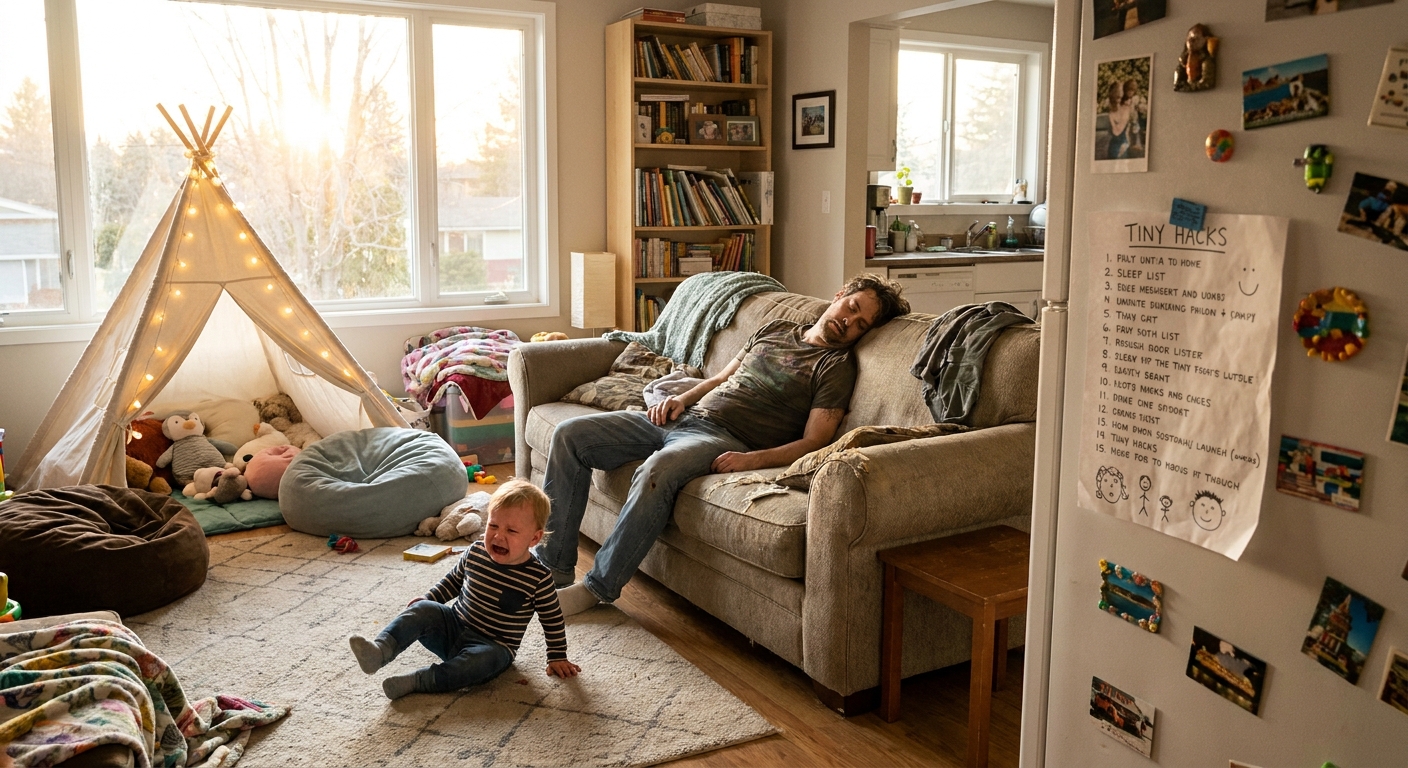
You step on one more rogue block and swear you’ll bag up every toy in the house. At the same time, you want your child to play, explore, and be creative.
When Toys Take Over Your Living Room (and Sanity)
Here’s the good news: you don’t have to choose between a home that looks like a daycare exploded and a sterile, toy-free zone. With a few simple, child-friendly systems, you can protect both your space and their play.
We’ll cover practical hacks for kids ages 1–6, with flexibility depending on your home and routines.
Why Less Stuff Often = Better Play
Research and many early childhood educators agree: when kids are surrounded by too many options, they often:
- Flit from toy to toy.
- Play more shallowly (dumping, scattering).
- Get overwhelmed and cranky.
When you offer fewer, more visible choices, you tend to see:
- Longer, deeper play.
- Less dumping just to find things.
- Easier cleanup (for them and you).
This is where toy rotation comes in.
Hack 1: The Toy Rotation System (That Takes 15 Minutes to Start)
Toy rotation sounds fancy, but it’s really just:
- Choosing a small selection of toys to be “out.”
- Storing the rest out of sight.
- Swapping them every week or two.
Step-by-Step Setup
Gather toys into categories:
- Blocks/building - Puzzles - Pretend play (kitchen, dolls, animals, vehicles) - Art supplies - Books
Pick a few from each category to be “on stage”:
- 1–2 building sets - 2–3 pretend play themes - 2 puzzles - A small basket of books
Store the rest in bins or boxes:
- Closet, under-bed boxes, or even labeled trash bags out of reach.
Rotate every 1–2 weeks:
- When interest fades or things feel messy, “shop” your storage and swap.
Age note: For toddlers (1–3), keep choices very limited and sturdy. For preschoolers (3–6), they can help choose what comes out next.
Hack 2: Set Up Simple “Play Zones”
Instead of toys everywhere, create areas of invitation.
Examples of Zones
- Cozy reading spot: A basket of books, a cushion, a soft light.
- Building corner: A low shelf with blocks, Duplo, or magnetic tiles on a mat.
- Pretend play area: A small kitchen, dolls, or a basket of animals.
- Art table: Crayons, paper, stickers in small containers.
You don’t need a huge house. A few defined spaces—even just corners—help kids understand where things belong.
Expert hint: Early childhood classrooms are set up this way for a reason. Kids focus better when activities have homes.
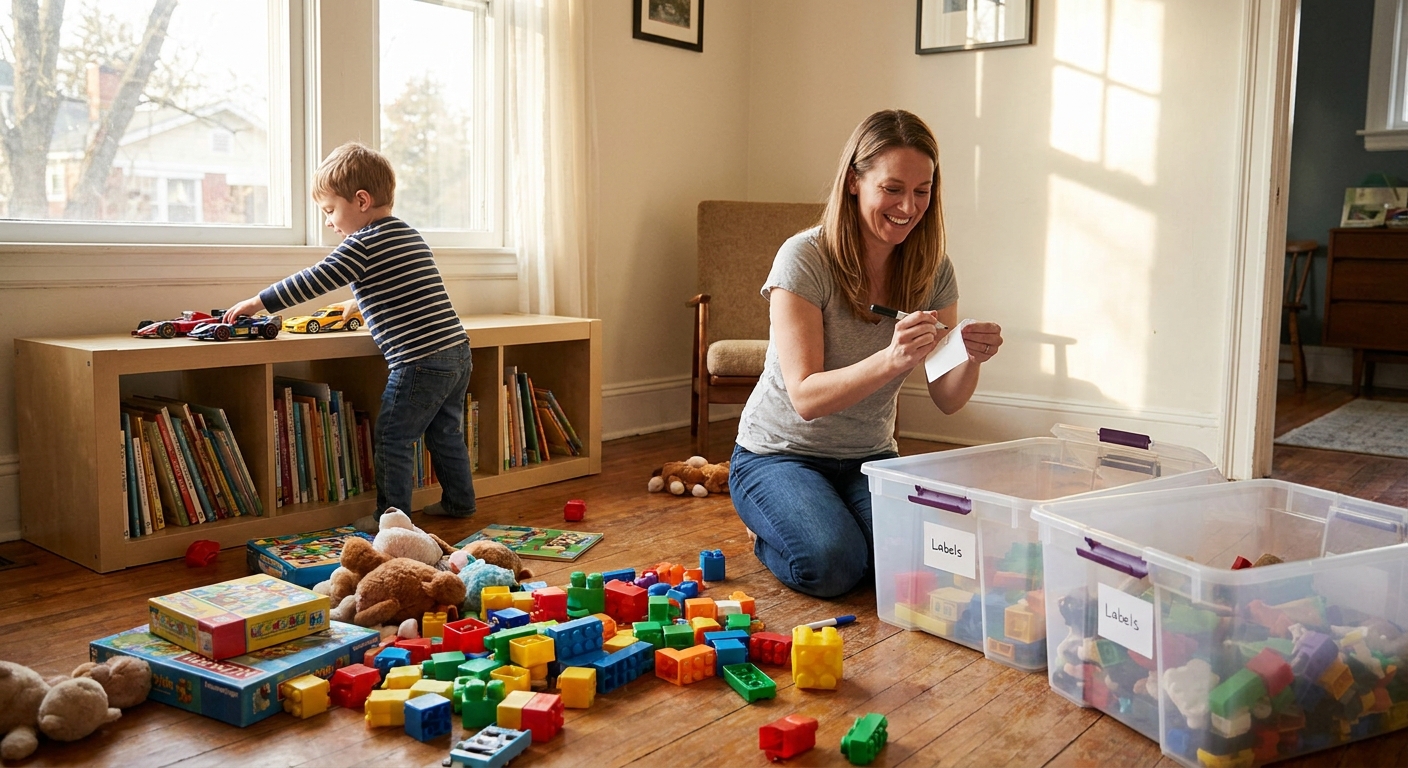
Hack 3: Clear Containers and Picture Labels
Young children clean up best when they can see where things go.
Use Transparent Bins When Possible
- Shoe-box sized clear containers
- Larger clear tubs for big toys
Add picture labels:
- Take photos of what goes inside (e.g., blocks, cars, animals).
- Print and tape to the front.
- Or draw simple pictures if you prefer.
For ages 1–3, big photos and minimal text. For 4–6, add the word under the picture to support early literacy.
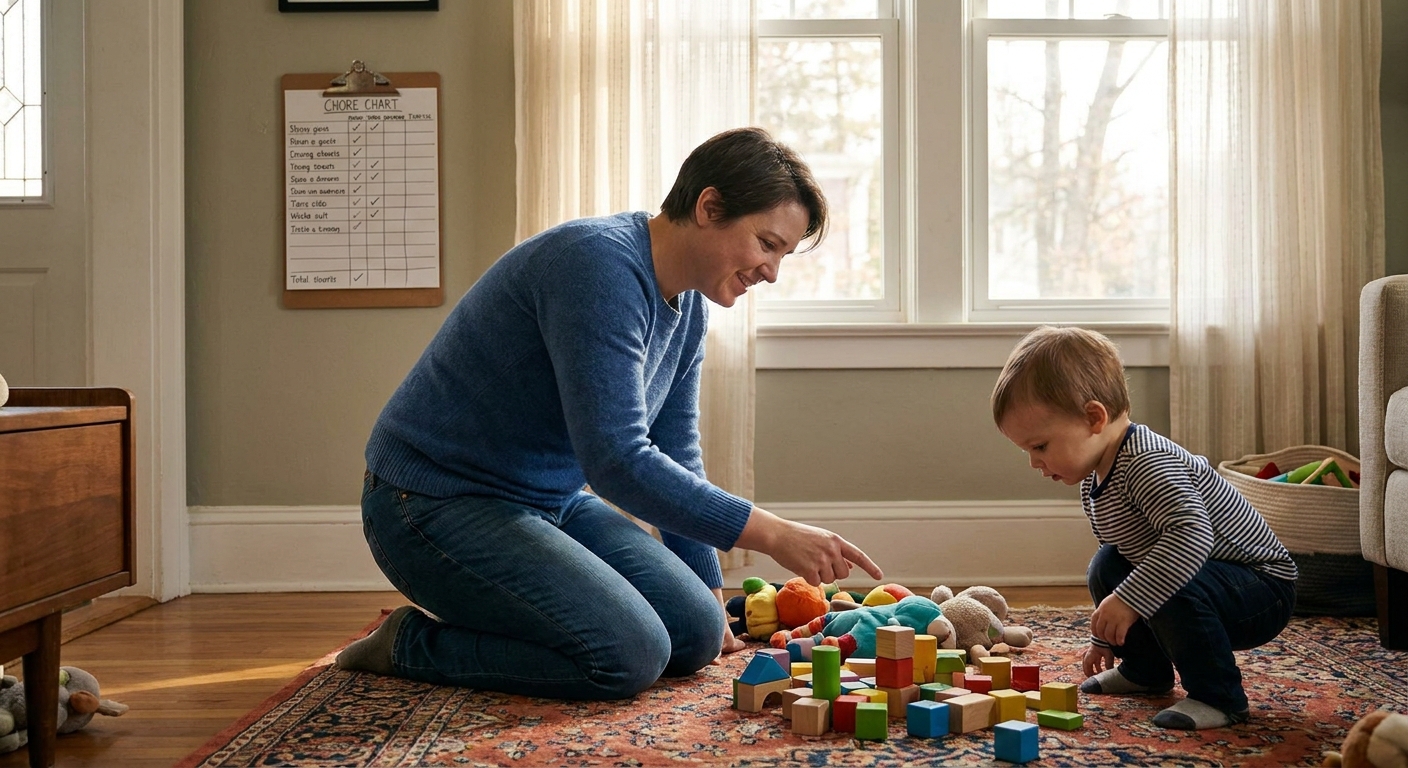
Hack 4: One Small Step Clean-Up (Not a 20-Minute Battle)
“Clean your room” is overwhelming. Try:
- “Let’s put all the animals back in their home.”
- “Can you be the car collector and I’ll be the book stacker?”
Use Timers and Music
- Set a 2–5 minute timer.
- Play a favorite clean-up song.
- Turn it into a race: “Can we clear the floor before the song ends?”
You’re training their clean-up muscle in short, successful bursts.
Hack 5: The “Pick-Up Path” Trick
When toys are everywhere, stand in one spot and:
- Scan for items that are the same (all blocks, all cars).
- Make a path: “We’re picking up everything that’s a block first.”
- Then switch categories.
This keeps both of you focused and prevents that helpless “where do we start?” feeling.
Hack 6: Contain the Mess (Literally) with Play Mats and Trays
Use defined boundaries for naturally messy play:
- Blocks or Lego on a play mat.
- Play-Doh on a tray.
- Art at a table with a wipeable cloth.
When it’s time to clean up:
- “Everything on the mat back into the bin.”
It’s easier than tackling a whole room.
Hack 7: Limit “Dumpable” Toys
Some toys practically invite chaos (think bins of random tiny things).
To help:
- Store small items (figures, cars) in shoebox-sized containers.
- Offer fewer at once (15 cars instead of 60).
- Avoid giant “miscellaneous” bins when possible.
If dumping is a favorite activity for your toddler, you can:
- Designate one “dump bin” with safe, easy-to-scoop toys.
- Make clean-up part of the game: “Dump! Scoop! Dump! Scoop!”
This gives them the sensory input they crave without total destruction.
Hack 8: Borrow Ideas From Montessori (Without Buying Anything Fancy)
Montessori-inspired play spaces focus on:
- Low shelves: Kids can reach and put things back.
- Fewer materials: Less overwhelm.
- Baskets and trays: Each activity has a home.
Using what you already have:
- Place 1–2 puzzles on a low shelf, not stacked.
- Put a few pretend play items (tea set, vet kit) each in its own basket.
- Keep art materials in caddies—only a few crayons or markers out at once.
The message to your child is: “These things are special and we care for them.”
Hack 9: The “End of Day Reset” That Takes 10 Minutes
Instead of trying to keep everything tidy all day (which is exhausting), aim for one short, family clean-up.
A Simple Evening Routine
- Set a 10-minute timer after dinner or before bath.
- Put on music.
Everyone has a job—yes, even toddlers:
- 1–2 years: Put soft toys into one big basket. - 3–4 years: Sort blocks vs. cars. - 5–6 years: Match picture labels to bins.
It won’t look like a magazine spread, and that’s okay. The goal is “reset enough”, not perfection.
Hack 10: “Toy Jail” vs. “Toy Hospital”
Some families like the idea of “toy jail” (items left out get taken away). This can work for older preschoolers, but it can also create shame.
A gentler twist:
- Toy Hospital:
- Broken or mistreated toys “go to the hospital” to be repaired.
- You can say: “This toy isn’t being used gently. It needs a rest in the toy hospital. We’ll try again another day.”
This still sets a boundary without heavy punishment.
Hack 11: Rotate Books Too
Huge overflowing bookshelves can be overwhelming.
Try:
- Display 5–10 books front-facing in a basket or on a ledge.
- Store the rest and swap weekly.
Kids are more likely to actually sit and look at books when they can see the covers and aren’t digging through piles.
Hack 12: Choose Open-Ended Toys Over One-Trick Wonders
Whenever you can, lean toward toys that can be used many ways:
- Blocks and magnetic tiles
- Simple dolls and animals
- Cars and trains
- Scarves, play silks, and cardboard boxes
Why this helps the mess:
- Fewer toys do more.
- You need less total stuff to keep them engaged.
If you’re feeling buried by toys, you might gently declutter the most repetitive, one-use items.
Hack 13: Use “Play Invitations” to Guide the Chaos
Set out a very simple activity as an invitation:
- A tray with play-dough, a few cookie cutters, and a rolling pin.
- A line of cars ready to “race.”
- Blocks with a few toy animals.
This doesn’t need to be Instagram-worthy. It just gives their play a starting point and often keeps mess more contained.
Hack 14: Remember: Kids Aren’t Messy On Purpose
It can feel like they’re trying to destroy the house, but most of the time they are:
- Exploring cause and effect.
- Seeking sensory input.
- Practicing independence.
When we add simple systems and repeat them kindly, kids really can learn to help:
- A 2-year-old can put items in one bin.
- A 3-year-old can match toys to pictures.
- A 4–6-year-old can handle category sorting and simple rules.
You don’t have to “crack down” to teach responsibility. You just need repetition, patience, and tools that match their age and stage.
You Deserve Space Too
Your home is for your children—but it’s also for you.
It’s okay to:
- Have one or two kid-free surfaces.
- Say no to more toys when you’re at capacity.
- Box up a portion of toys if the clutter is stressing you out.
The goal isn’t a perfectly curated playroom. It’s a home where your child can play freely and you can breathe.
Little by little, with these hacks, you can move from “toy chaos everywhere” to “a lived-in space that mostly works.” And in a season of crumbs, spills, and constant change, “mostly works” is a huge win.