You’ve made it through work, school runs, snacks, and bath time… and then dinner hits.
When Mealtimes Feel Like the Hardest Part of the Day
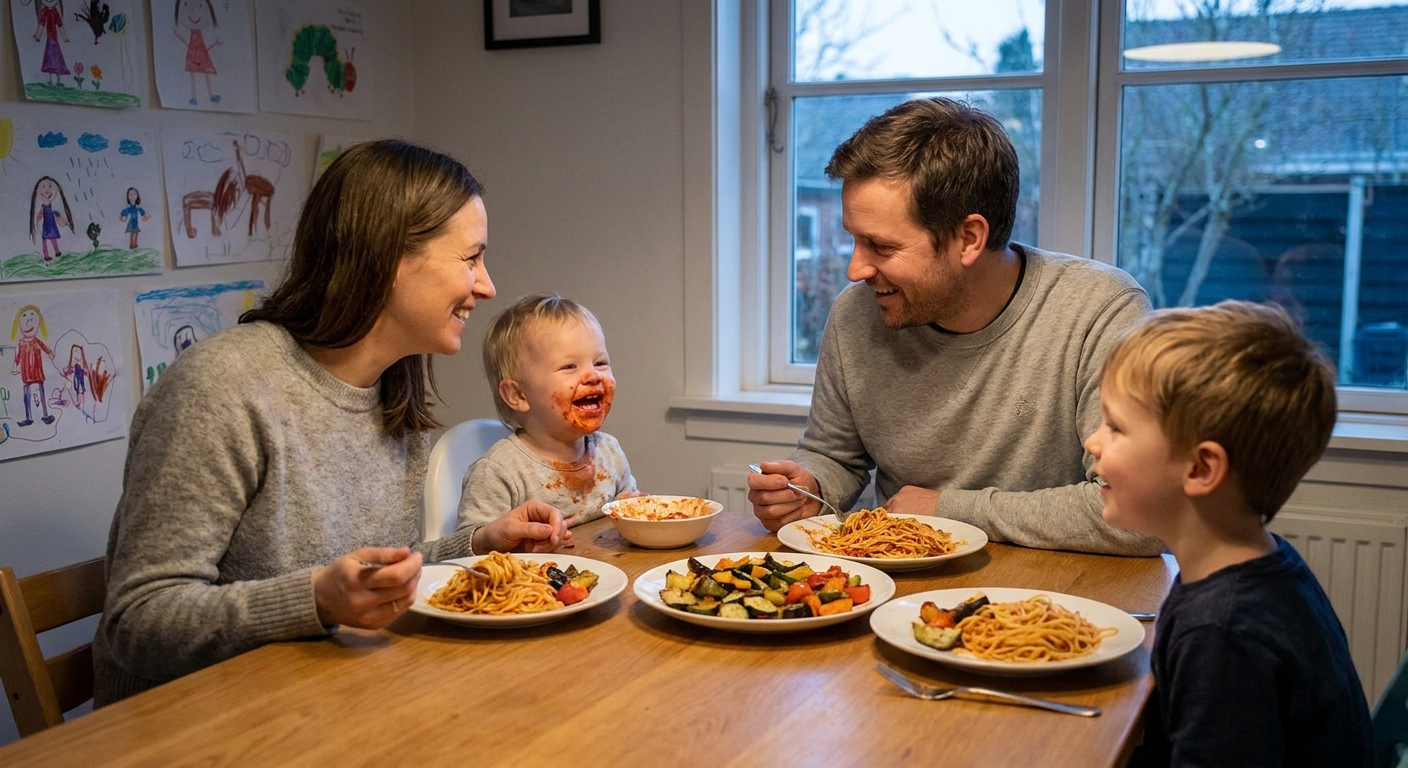
Someone’s whining. Someone’s poking a sibling. Someone’s dramatically sliding under the table because their pasta has “the wrong sauce.”
If family meals feel more draining than peaceful, that doesn’t mean you’re bad at this. It usually means you’re missing a simple, predictable structure that kids can lean on.
Think of this as a gentle, step-by-step game plan—not to turn dinner into a picture-perfect event, but to make it feel less chaotic and more doable most nights.
You don’t need to overhaul everything at once. Choose one step, try it for a week, then add another when you’re ready.
Step 1: Set a Loose Meal & Snack Rhythm
Kids cope better with limits and choices when their bodies roughly know what to expect.
A sample rhythm for toddlers and preschoolers:
- Breakfast
- Morning snack
- Lunch
- Afternoon snack
- Dinner
Aim for 2–3 hours between eating opportunities, with only water in between. This helps them arrive at meals hungry but not starving, and makes them more open to new foods.
You don’t have to be exact. Think “pattern,” not “schedule carved in stone.”
Step 2: Create a Simple Mealtime Script
Children feel calmer when they know the “rules of the game.” A mealtime script makes expectations clear.
Your script might look like:
- We wash hands.
- We sit at the table or in the high chair.
- A grown-up sits with us.
- Food stays at the table.
- When we’re done, we say, “All done,” and a grown-up helps us get down.
Introduce it warmly:
“In our family, we have a little mealtime plan. I’ll help you remember. We wash hands, we sit, we eat and talk, then we say ‘all done.’”
Expect reminders. That’s not failure; that’s just how kids learn.
Step 3: Protect Your Own Seat at the Table
When you’re hopping up every two minutes to grab things—or not sitting at all—kids pick up on that scattered energy.
Try this:
- Do a one-minute pre-meal check:
- Do we have water or milk out?
- Do we have utensils and napkins?
- Is there at least one food each child usually eats?
- Decide that once you sit, you’ll mostly stay seated.
You don’t have to be eating a full meal. Even having a cup of tea or a small snack while they eat sends the powerful message: Mealtimes are for being together.
Step 4: Use the “One Family Meal, With Options” Approach
To reduce chaos, set a gentle boundary: one basic meal for everyone, with small tweaks when needed.
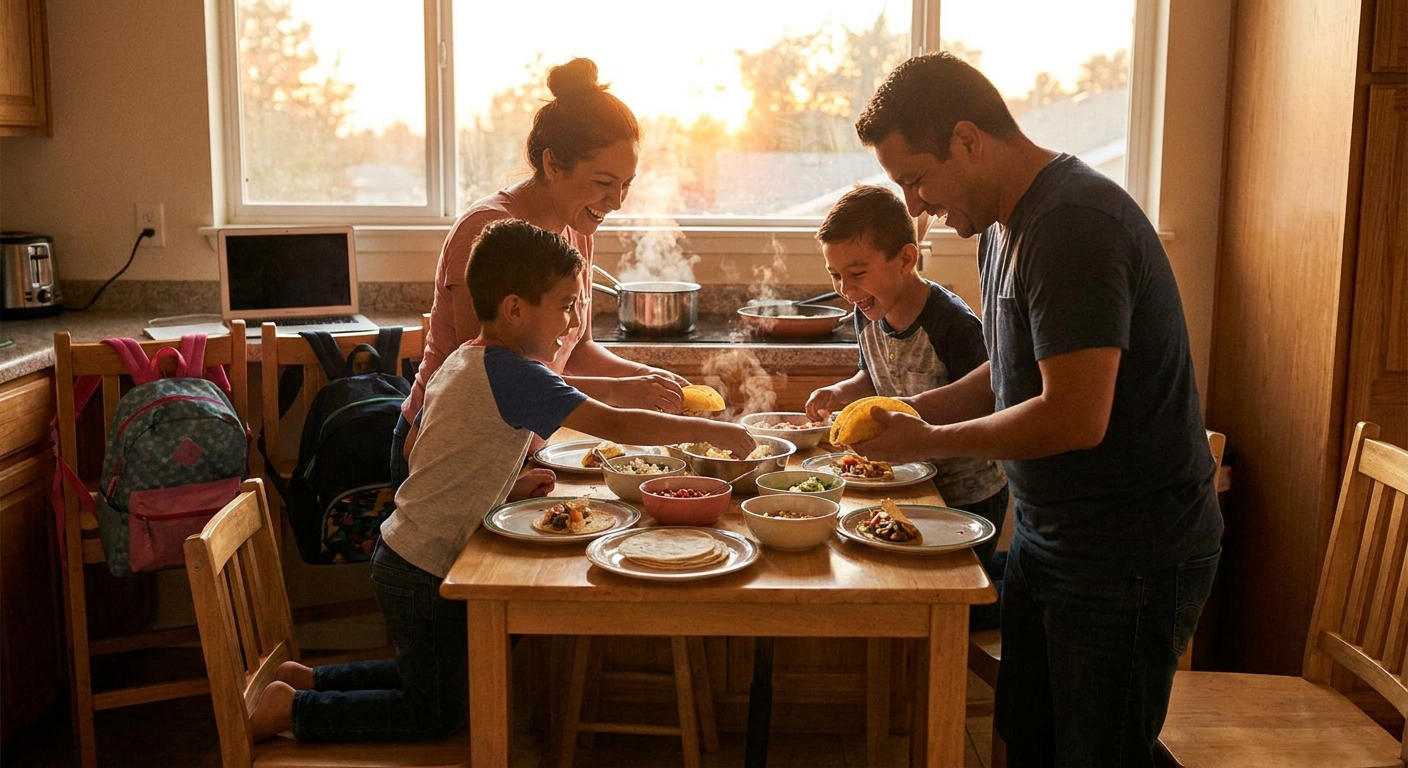
For example, taco night:
- You serve: tortillas, seasoned meat or beans, cheese, lettuce, tomatoes, avocado, fruit.
- Child A eats: tortilla, cheese, fruit.
- Child B eats: meat, tortilla, lettuce, fruit.
No extra meals. No battles.
You can make this feel safe by:
- Always including a safe food (bread, rice, fruit, plain pasta—something they usually accept).
- Serving items family-style whenever you can, so kids can choose what goes on their plate.
Your line can be:
“This is what’s for dinner. You can choose what you’d like from what’s on the table.”
Step 5: Add a Tiny Ritual That Signals “We’re Together Now”
Rituals help kids shift gears from running around to connecting.
Choose something small and repeatable:
- One deep breath together before eating
- A “cheers” with cups of water
- Everyone shares one thing they’re thankful for
- A silly question of the night: “Would you rather have a pet dragon or a pet dolphin?”
This doesn’t have to be serious or spiritual unless that fits your family. The point is to say: This time is special because we’re together.
Step 6: Plan for Common Disruptions (So You’re Not Surprised)
Wiggles and leaving the table
Set the expectation calmly:
- “Food stays at the table. If your body needs to move, you can be all done.”
For toddlers:
- Aim for 5–10 minutes of sitting.
- Consider a small fidget (a textured mat under their feet, a wiggle-friendly seat).
If they get up, gently follow through:
- “I see you’re done. I’ll save your plate until the meal is over.”
No lectures. Just consistency.
Throwing or playing with food
Stay calm, even if you’re frustrated—big reactions can turn it into a game.
- First time: “Food is for eating or leaving on the plate.”
- Second time: “If food is thrown, it’s telling me you’re all done.” Remove the plate.
Offer a snack at the next regular eating time. You’re not punishing—you’re teaching limits.
“I don’t like this!” (Immediately)
Try not to take it personally. Respond simply:
- “You don’t have to eat it.”
- “You can leave it on your plate or put it on your ‘no thank you’ plate.”
A small side plate can be a game-changer for kids who feel overwhelmed.
Step 7: Keep Talking… But Not Just About the Food
If all the conversation is:
- “Try a bite.”
- “Eat your veggies.”
- “Two more spoons, please.”
…then mealtimes start feeling like tests, not connection.
Instead, limit food talk and lean into life talk.
Easy prompts:
- “What was something funny that happened today?”
- “What is your stuffed animal’s favorite food?”
- “What should we do this weekend?”
This doesn’t just make meals more pleasant; it also supports language and emotional development.
Step 8: Choose One “Emergency Backup” Meal
Some nights will go off-script. Tantrums, traffic, late meetings, surprise fevers.
Choose one super-simple backup meal you always have ingredients for and that everyone will eat something from.
Examples:
- Scrambled eggs, toast, fruit
- Peanut butter (or seed butter) sandwiches, carrot sticks, cheese
- Frozen veggie nuggets, peas, applesauce
There is no shame in using your backup. It’s a tool, not a failure.
Step 9: Keep Your Own Expectations Gentle
You might notice that a lot of this plan is more about your mindset and structure than about recipes.
On any given night, “success” isn’t:
- Everyone loving the meal
- Zero complaints
Instead, try redefining success as:
- We sat together, even for 10 minutes.
- The adults stayed mostly calm.
- We followed our basic rhythm and script.
- There was at least one small moment of connection.
If one of those happened, you’re building something important, even if the rest felt bumpy.
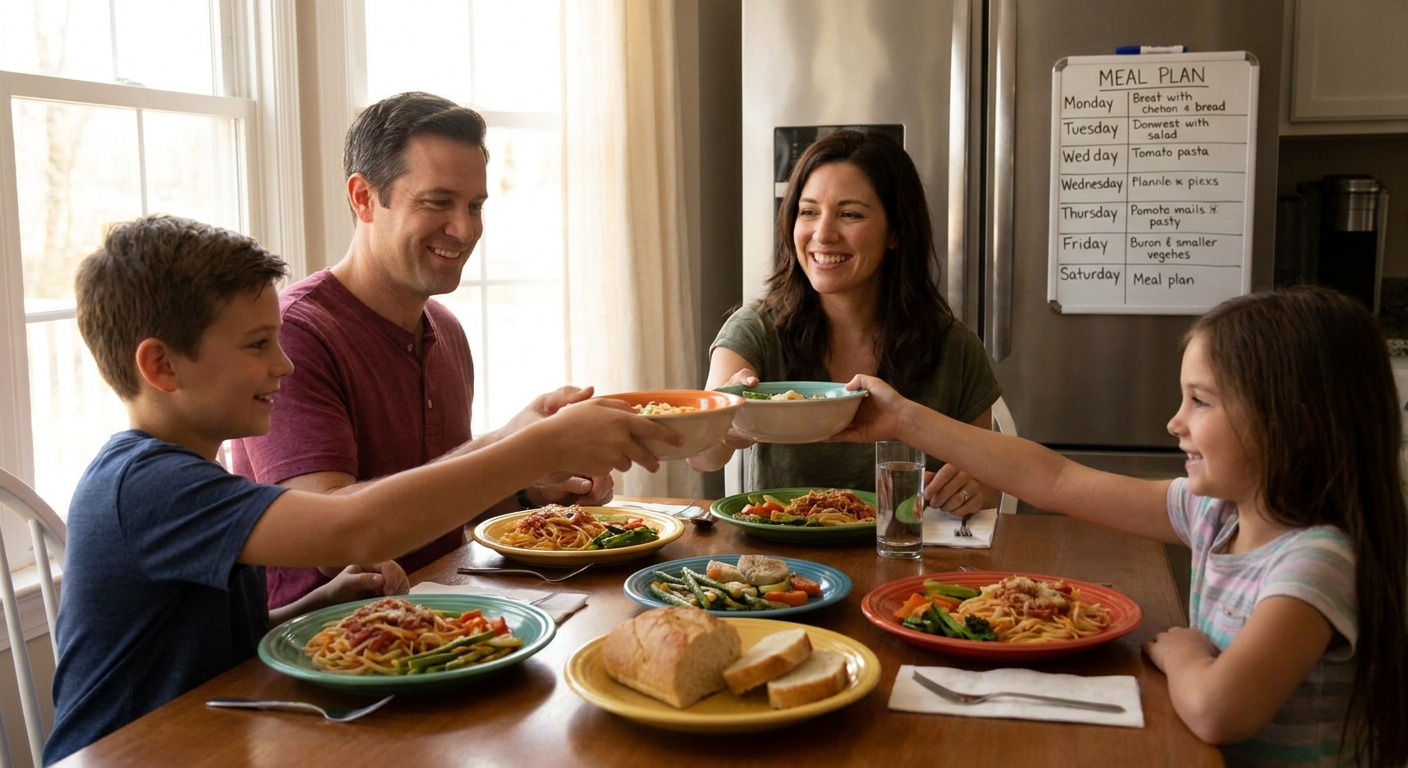
A Quick Recap You Can Stick on the Fridge
Your Mealtime Game Plan:
- Loose rhythm: Meals and snacks every 2–3 hours, water in between.
- Simple script: Wash hands, sit, eat/talk, say “all done.”
- One family meal: With at least one safe food at each meal.
- Grown-up presence: You sit too, even if you’re not hungry.
- Tiny ritual: A “cheers,” a question, or a moment of thanks.
- Calm boundaries: Food stays at the table, no pressure to eat.
- Backup meal: One easy option for hard days.
You can start with just one of these and add on slowly. There’s no deadline, no race.
You’re Allowed to Grow Into This
If tonight looks like:
- Chicken nuggets
- A toddler eating three bites and then sliding off their chair
- You remembering after the meal that you wanted to ask your “question of the day”
…that’s okay.
Change with young kids works best in small, repeated steps, not grand overhauls.
Every time you sit, offer, connect, and keep things mostly calm, you’re telling your child:
Our table is a safe place. We figure things out together.
That message—and not the menu—is what will carry them forward.