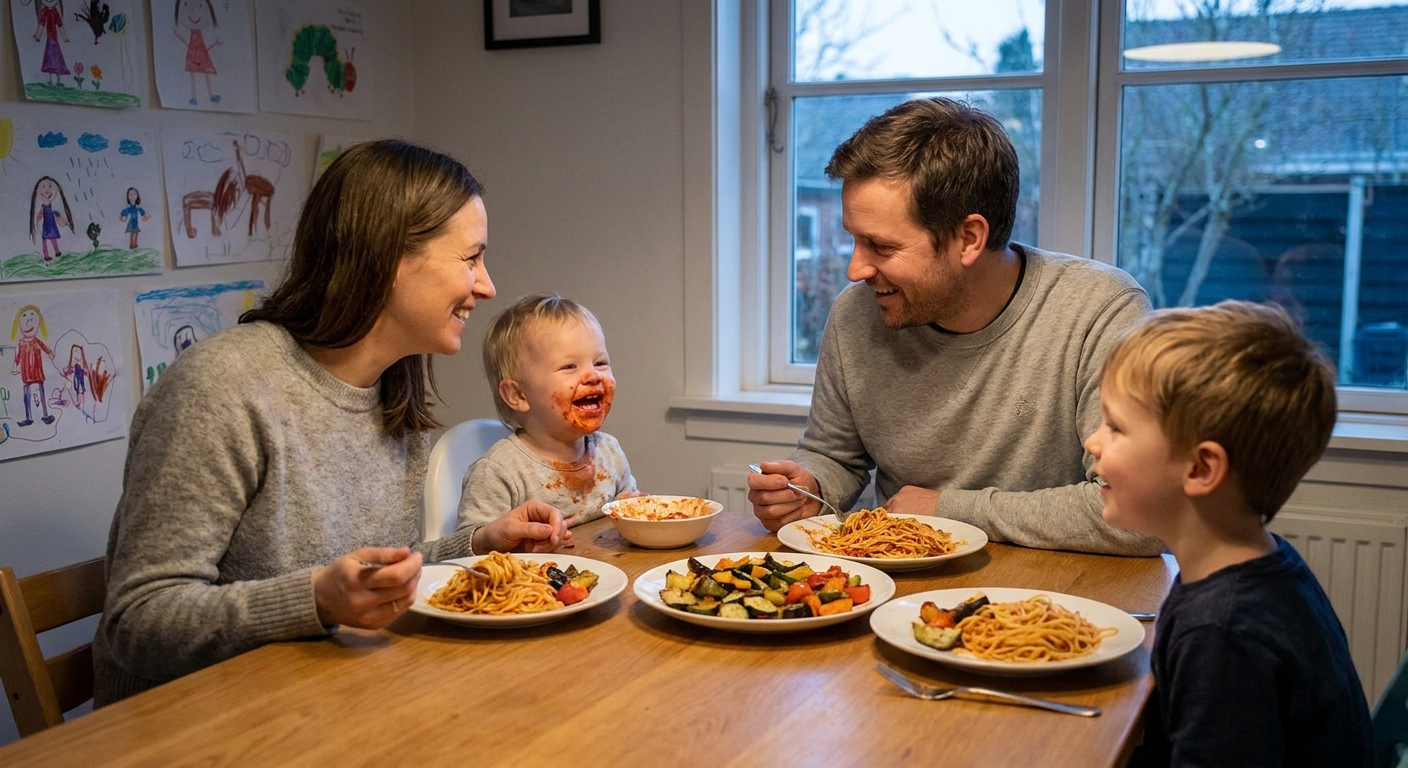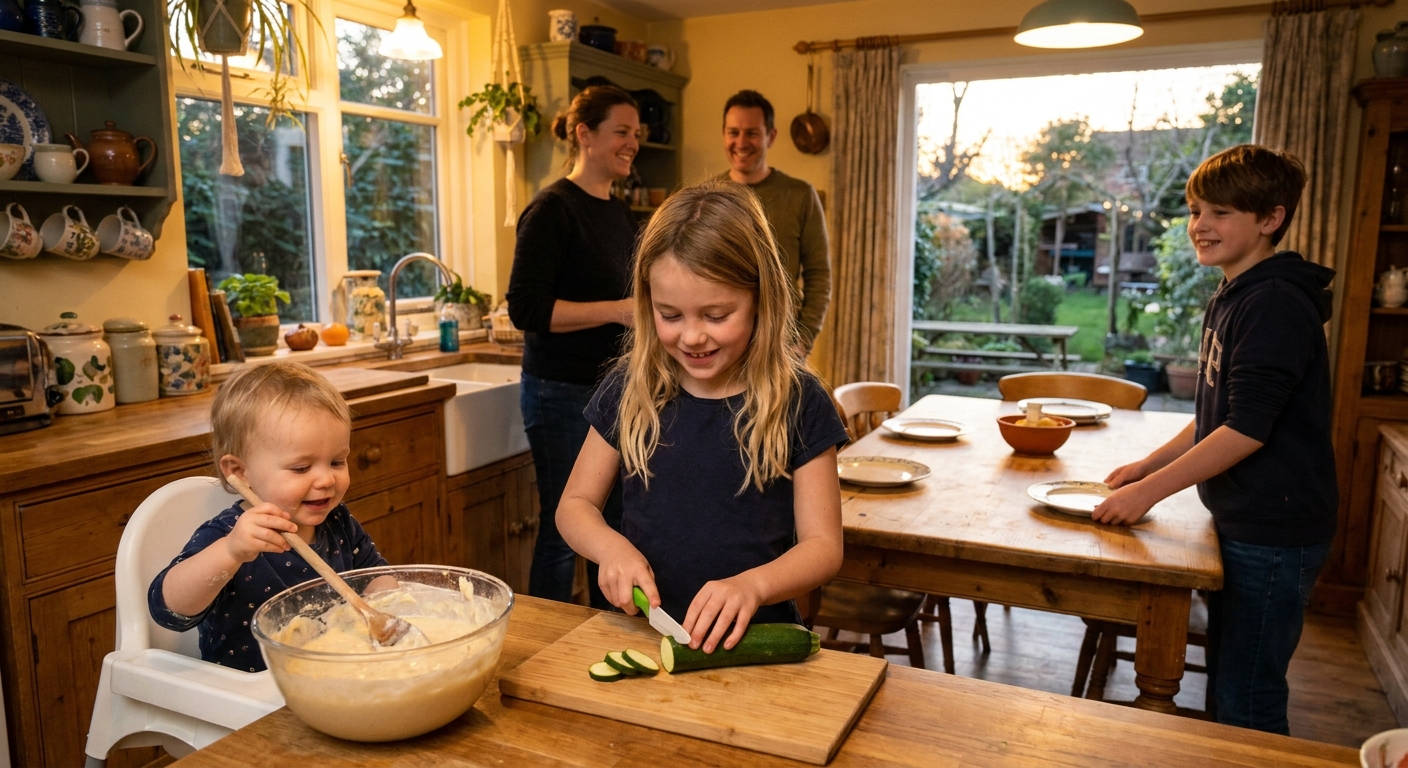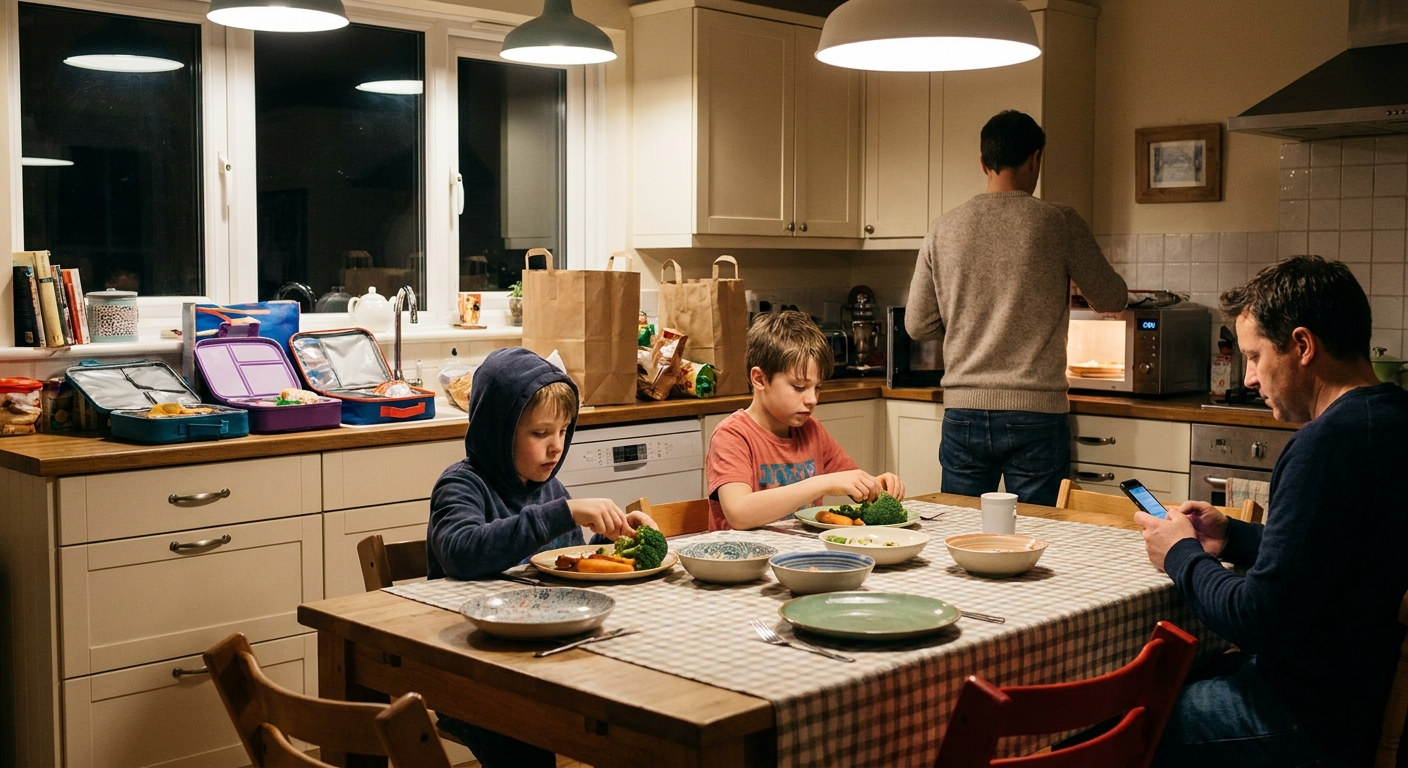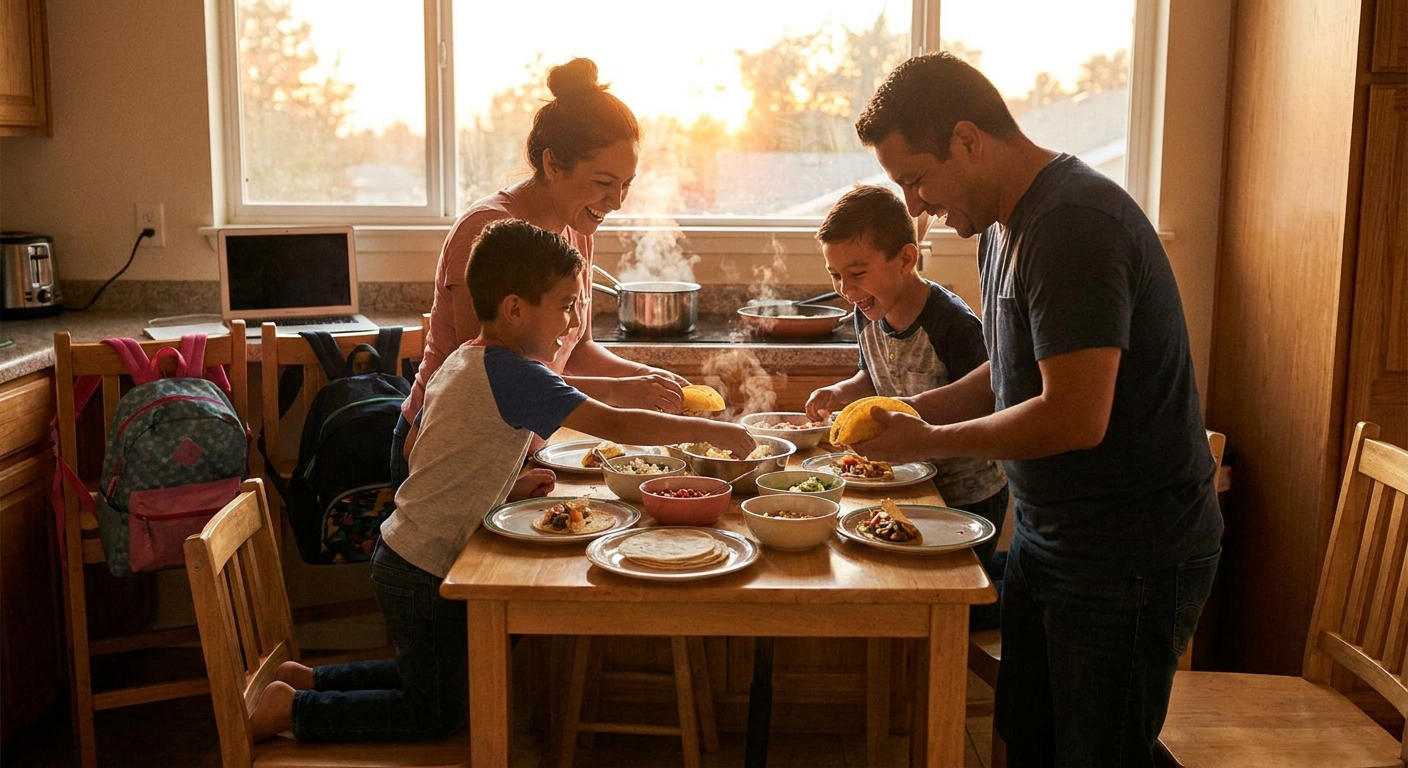
If dinnertime at your house feels like a race against the clock, you’re not alone.
Why Family Meals Matter More Than Perfect Recipes
Between work, daycare pickups, homework, and the never-ending laundry pile, the idea of a calm, home-cooked family meal can feel… laughable.
Here’s the reassuring part: research shows it’s not the gourmet food or the length of the meal that matters most. It’s the connection.
According to the Family Dinner Project and multiple child-development studies, regular family meals are linked with:
- Better emotional health
- Stronger language development
- Lower risk of risky behaviors in teens down the line
- More adventurous eating over time
And those benefits come from as little as 10–20 minutes together at the table, a few times a week.
You don’t need perfection. You just need a tiny pocket of togetherness.
What “Family Dinner” Can Look Like at Different Ages
Babies (6–12 months): Tiny humans, big observers
At this age, your baby is mostly:
- Watching your facial expressions
- Noticing how you eat
- Learning that mealtimes are social
Simple ideas:
- Pull the high chair up to the table, even if baby already ate their purée.
- Narrate what you’re doing: “I’m scooping my rice. It’s warm and soft.”
- Offer safe finger foods if developmentally ready (e.g., soft cooked veggies, avocado, scrambled egg strips).
You’re not aiming for a long shared meal; you’re just inviting baby into the rhythm of family eating.
Toddlers (1–3 years): Wiggles, opinions, and thrown peas
Toddlers are wired to test limits and assert independence, especially around food.
You might see:
- Food flung on the floor
- Sudden favorite-food boycotts
- Two-bite dinners followed by a huge breakfast
What helps:
- Keep mealtimes short: 10–15 minutes is plenty for most toddlers.
- Serve a “safe food” every time: bananas, bread, plain pasta—something they usually accept.
- Avoid pressure: no “Just one more bite” or “You have to eat your broccoli first.”
Pediatric feeding experts often recommend the Division of Responsibility (from dietitian Ellyn Satter):
- You decide what, when, and where food is offered.
- Your child decides how much and whether to eat it.
This reduces battles and builds trust.
Preschoolers (3–5 years): Talkers, helpers, and negotiators
Preschoolers love feeling included and capable.
Use that to your advantage:
- Ask them to place napkins or spoons.
- Let them choose between two veggies: “Carrots or peas tonight?”
- Invite them to share a “rose and thorn” of their day (best and hardest moment).
They may still have picky phases, but they’re also ready for simple table rules like:
- “We sit at the table while we eat.”
- “We use kind words about the food.”
Keep rules clear, calm, and consistent.
A Real-Life 20-Minute Dinner Routine (You Can Actually Do)
Here’s a sample weeknight dinner strategy that’s realistic for tired parents.
Step 1: Choose an easy base (5–10 minutes hands-on)
Think:
- Rotisserie chicken + microwaveable rice + frozen veggies
- Scrambled eggs + toast + sliced fruit
- Pasta with jarred sauce + cucumber slices + cheese
It can be semi-homemade. Frozen. Pre-chopped. Zero guilt.
Step 2: Serve "family style" when possible
Put parts of the meal in the center of the table and let kids serve (or point to) what they want.
This:
- Builds independence
- Reduces power struggles
- Lets kids practice listening to hunger/fullness cues
For toddlers, you might plate for them but still offer small choices: “Do you want your carrots touching your pasta or in a little bowl?”
Step 3: Protect the table time (10–20 minutes)
This is the real goal.
Try to:
- Turn off TVs and put phones away (yours too—this is huge for kids).
- Sit down with some food, even if you ate earlier.
- Start a simple ritual, like a gratitude moment or a silly question of the day.
Example questions:
- “What made you laugh today?”
- “If you could be any animal at the zoo, what would you be?”
- “What was something tricky that you did anyway?”
The ritual gives kids something to look forward to beyond the food.
Handling Common Mealtime Challenges (Without Losing Your Mind)
“My child won’t sit still.”
Age-appropriate expectations matter:
- Toddlers: aim for 5–10 minutes, then let them be excused.
- Preschoolers: 10–15 minutes is reasonable.
You can:
- Use a booster or footrest so they feel stable.
- Have a simple cue: “When you’re done, you may say ‘All done, thank you’ and bring your plate to the counter.”
If they’re roaming the room, gently redirect: “Food stays at the table. If you’re done, you may be excused.”
“They only want beige foods.”
Perfectly normal in early childhood.
To support variety over time:
- Keep serving new foods alongside familiar ones, without pressure.
- Offer a tiny taste (a single pea, a small noodle) instead of full servings.
- Use neutral language: “That’s chicken. It’s chewy and warm,” instead of “You’ll love this!”
Exposure without pressure is key. Some kids need 15–20 exposures to a food before they’re willing to try it.
“We’re too busy for family dinner.”
Family meals don’t have to be dinner and don’t have to happen daily.
Consider:
- Weekend breakfasts as your main shared meal
- A family snack time (apple slices and cheese at the table at 4:00 p.m.)
- One or two weeknights protected for simple sit-down meals
If evenings are chaotic, try a quick “together snack” before activities. It still counts as connection.
Evidence-Backed Tips to Make Meals Feel Calmer
Pulled from pediatric dietitians, child psychologists, and family therapists:
- Set a loose routine. Similar mealtimes each day help kids feel safe and regulate appetite.
- Avoid grazing all day. Constant snacks blunt hunger, making meals more frustrating for everyone.
- Skip the food bribes. “Three more bites for dessert” teaches kids to value dessert more and distrust their fullness cues.
- Model the behavior you want. Try a bite of the veggie yourself and describe it: “It’s a little crunchy and sweet.”
- Use “no thank you” plates. A small side plate for foods they don’t want to eat—reduces drama and keeps exposure.
You’re Allowed to Keep It Simple
Frozen pizza with carrot sticks can be a family meal.
Toast and scrambled eggs at 6:15 p.m. absolutely counts.
What your children will remember most is not whether the vegetables were organic or if the plates matched. They’ll remember:
- That someone sat with them
- That there was time for their stories
- That the table felt mostly safe and kind
If all you can manage this week is one 15-minute meal where everyone sits together, that’s a win. That’s you actively building your child’s emotional world while you both eat.
You don’t need to earn that by cooking from scratch. You just need to show up.
And you already know how to do that.