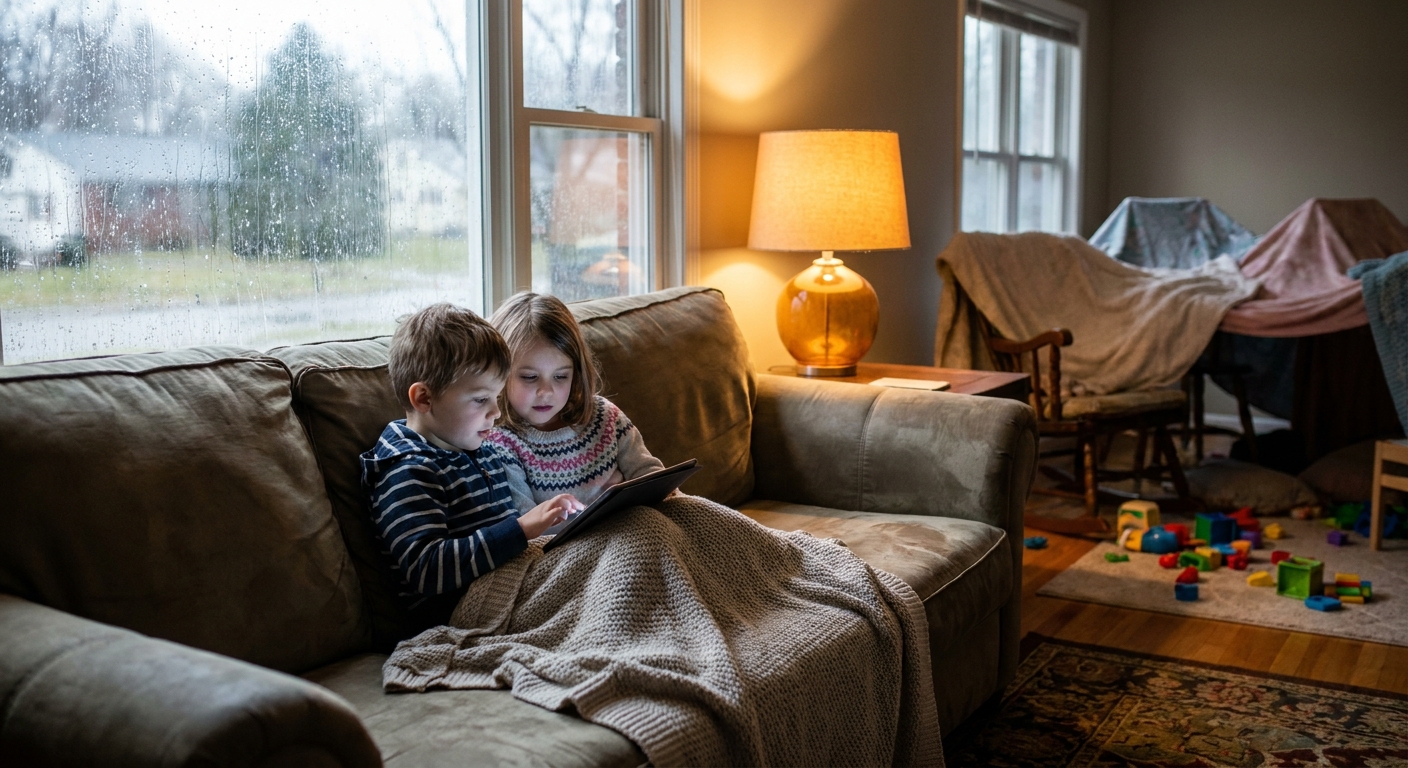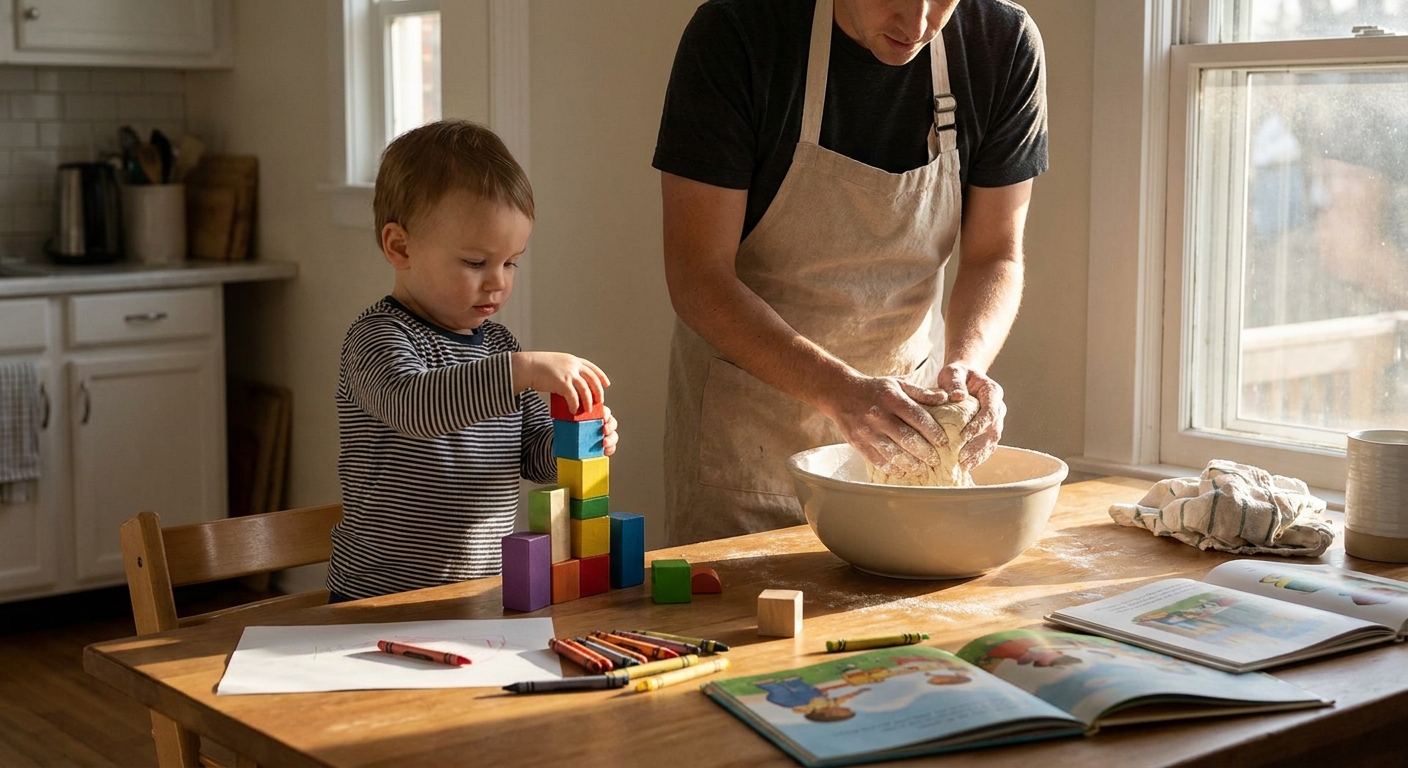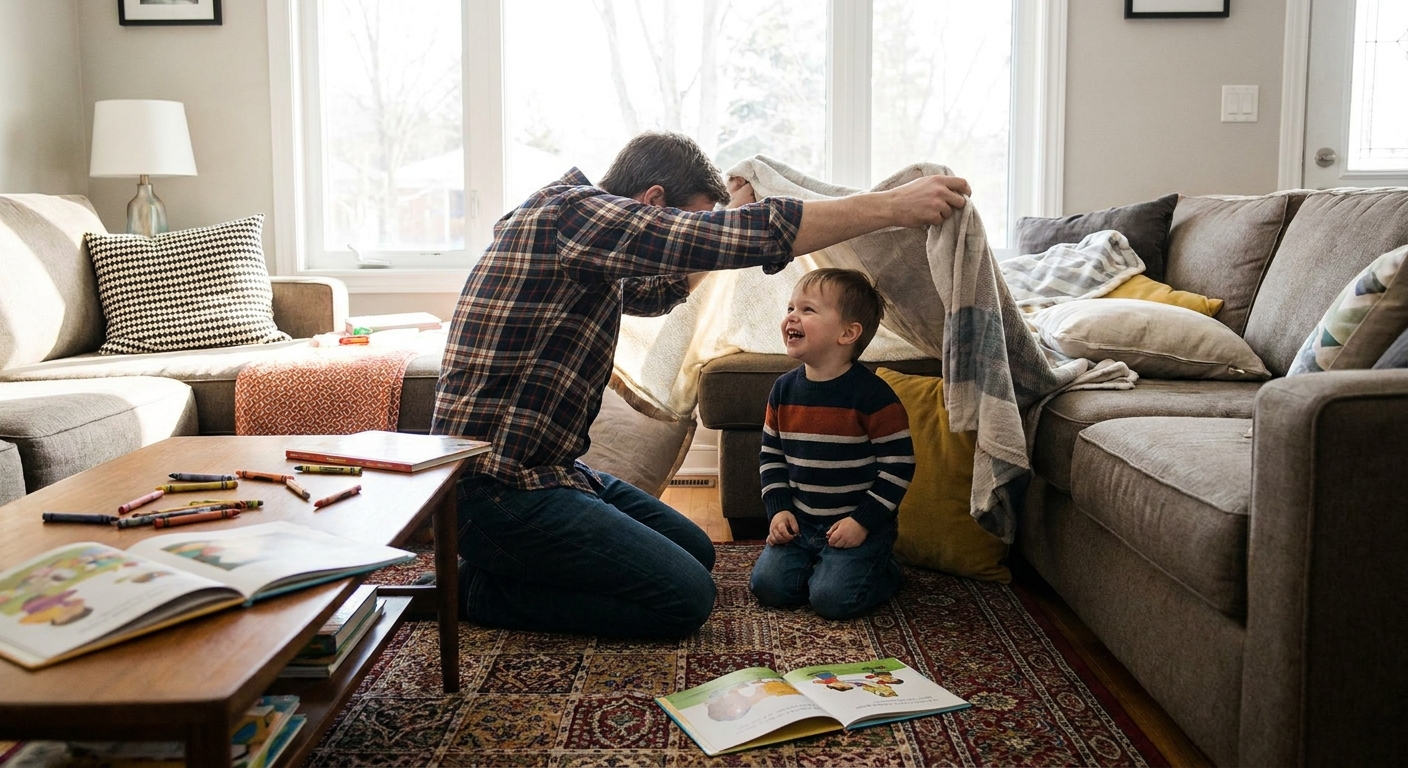
"I’m boooored." Those two words can hit like a wave of guilt. You might feel pressure to jump in with crafts, outings, or elaborate activities.
Why Boredom Isn’t the Enemy
Here’s a reframe: boredom is often the starting point of creativity, not a sign you’re failing as a parent.
This guide will help you support child‑led play—where kids take the lead, and you offer just enough structure to keep things safe and possible.
What Is Child-Led Play (and Why Does It Matter)?
Child‑led play is when:
- Your child chooses what and how to play.
- You follow their lead instead of directing every step.
- There’s no “right” outcome (unlike a worksheet or a specific craft).
- Stronger problem‑solving skills
- Better emotional regulation
- Higher creativity and self‑confidence
Experts in child development consistently link this kind of free play to:
You don’t have to be hands‑off. Think of yourself as the stage crew, not the main actor: you set up the space, offer materials, and make sure everyone is safe.
Ages 2–4: Gentle Choices, Big Imagination
Young children still need more scaffolding, but they’re surprisingly good at leading the story once they get going.
1. The Two‑Tray Setup
Instead of offering one specific activity, set out two trays with different materials.
Example:
- Tray 1: Playdough, a cup, a spoon, a plastic animal
- Tray 2: Blocks, a toy car, a scarf
Invite your child: "Which tray do you want to play with first?"
Then watch. Comment warmly on what they do:
- "You’re making long snakes."
- "The car is going under the scarf tunnel!"
You’re not giving directions; you’re showing interest.
2. Yes Space (Within Limits)
Create a small area where almost everything is okay to touch, move, and explore.
Could include:
- Sturdy toys
- Pillows to climb on
- A few kitchen items (plastic bowls, wooden spoons)
- Make sure it’s physically safe
- Step in only when needed (hitting, unsafe climbing)
Your role is to:
Child‑led tip: When you do step in, say what can happen instead of just what can’t: "We don’t hit with spoons. You can stir the pot or tap the floor."
Ages 4–6: Simple Prompts, Big Ownership
Preschool and early school‑age kids can handle more open‑ended invitations.
1. "I Wonder" Invitations
Instead of, "Let’s build a tower like this," try:
- "I wonder how tall a tower you could build with just these 10 blocks."
- "I wonder what would happen if the animals visited the block city."
Then stand back and let them try. Your curious tone signals that there’s no wrong answer.
2. Loose Parts Play
Loose parts are random, safe items kids can use in many ways.
Ideas:
- Bottle caps
- Fabric scraps
- Cardboard tubes
- Pinecones, smooth stones (for kids past the mouthing stage)
- A tray
- A piece of fabric
- A big sheet of paper
Offer them with a base:
Watch what your child creates: a pretend soup, a city, a pattern. Ask things like, "Tell me about what you made," rather than guessing.
3. Dress‑Up & Role Play
Gather a simple dress‑up box:
- Old scarves
- Hats
- An apron
- A bag or backpack
Let your child choose the characters and story. If they assign you a role ("You be the dragon!"), follow their lead, but resist steering the plot.
Child‑led twist: If they get stuck, offer a gentle nudge: "Hmm, the dragon looks hungry. What happens next?" Then zip your ideas again.
Ages 6–9: Projects They Own (Not You)
Older kids are ready for slightly longer projects—as long as they feel like the project truly belongs to them.
1. Project Ideas Menu
Instead of saying, "Let’s build a robot out of boxes," try offering 3–4 options:
- Build something out of recyclables
- Start a pretend store
- Create a board game
- Invent a new superhero
Let your child pick, or even better, let them say, "None of those," and come up with their own.
Your role:
- Help gather materials
- Be available for tricky parts (e.g., using scissors, stronger tape)
- Ask curious questions: "What’s your plan?" "What do you need next?"
2. Kid‑Directed Playdates
When possible, let your child and their friend decide how to spend at least part of the playdate.
You can set guardrails:
- "You can play anywhere on this floor."
- "No water in the living room."
- Someone is unsafe
- One child is consistently steamrolling the other
Then encourage them to agree on a plan together. Step in only if:
This builds negotiation skills and social problem‑solving.
3. The Maker’s Shelf
Designate a small shelf or bin as their "maker space."
Fill with:
- Paper and cardboard
- Tape and glue sticks
- Crayons, markers
- Safe scissors
Make it clear: "This is your space. You can use these things for your ideas." Accept that it will get messy. Occasional resets are okay; constant control is not.
How Much Should You Join In?
A helpful way to think about your role:
- Observer: Sit nearby, watch, and comment occasionally.
- Assistant: Help with tricky tasks (opening containers, tying capes) when asked.
- Co‑Player (By Invitation): Join the game when your child wants you, and let them be the boss.
- "Do you want me to play with you or just watch for a bit?"
Try asking:
You might be surprised how often kids choose "just watch"—it still feels like connection.
Handling the "I’m Bored" Moments
Instead of rushing to fix boredom, try:
Empathize:
- "Being bored can feel uncomfortable, huh?"
Offer a light structure:
- "Do you want an idea menu or do you want to think of something yourself?"
Give space:
- Let them wander a bit. Many kids will find something once the pressure is off.
If they’re truly stuck, you can offer open‑ended suggestions:
- "You could build, draw, act, or explore. Which sounds best?"
When Child-Led Play Makes You Anxious
It can feel unsettling to step back, especially if you didn’t grow up with a lot of free play yourself.
You might worry:
- They’re not learning enough.
- The mess will be huge.
- They’ll choose screens if given a choice.
- Learning through play is real learning—often deeper than worksheets.
- You can set clear but limited boundaries: "You can use art supplies at the table, not on the couch."
- It’s okay to have times that are screen‑free by default.
A few gentle reminders:
Start small. Choose a 20–30 minute window once a day for child‑led play. Over time, as you see your child’s ideas blossom, your own comfort is likely to grow.
You Don’t Need to Be the Entertainment
Your presence, your curiosity, and your trust in their ideas are far more important than the activity itself.
If all you do this week is:
- Set out two trays instead of one,
- Ask, "What’s your plan?" before you instruct,
- Say, "Do you want me to watch or play?" at least once,
…you are already making a powerful shift toward child‑led play.
It’s enough if your home is a place where your child feels safe to explore, create, and sometimes be bored—because that’s where their own brilliance has room to grow.