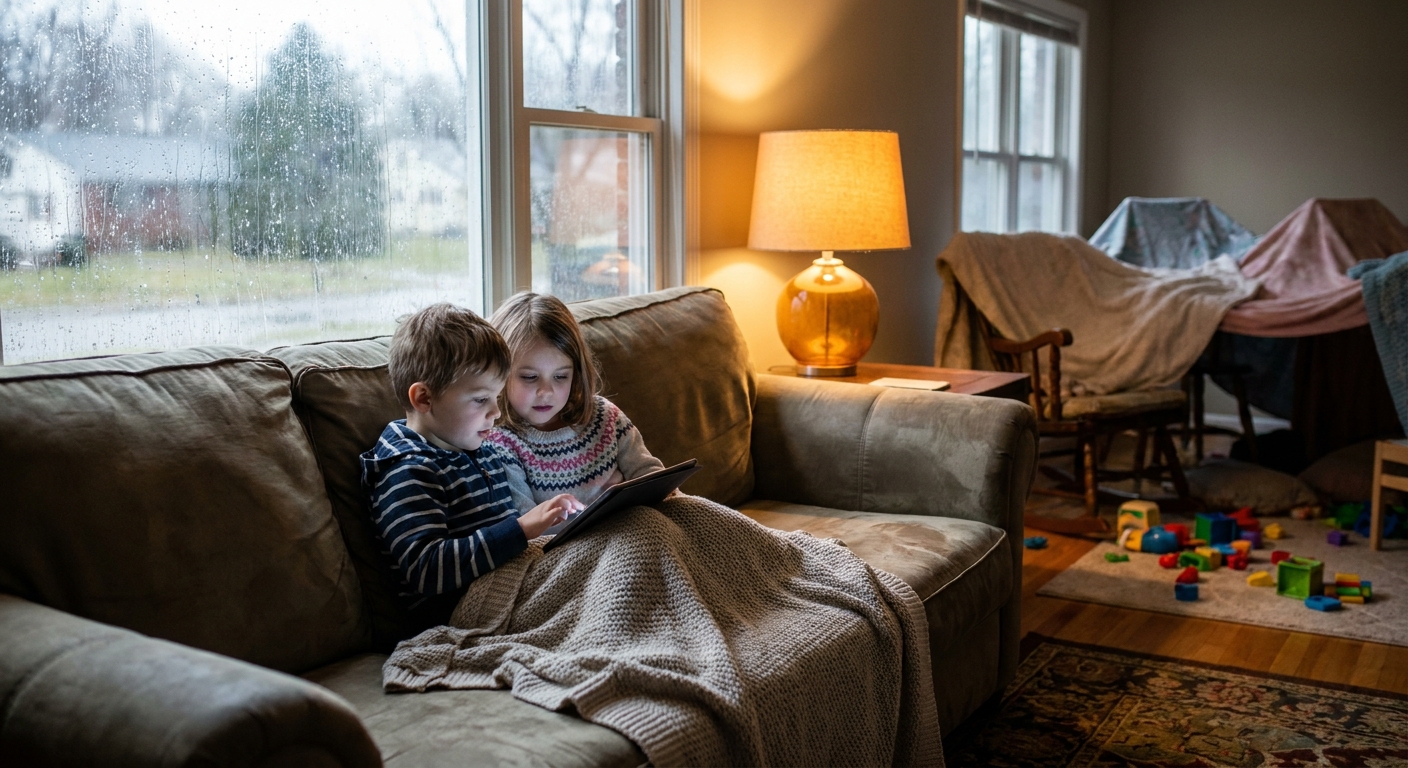
When the weather turns gloomy and your kids bounce off the walls, it’s easy to reach for a tablet "just for a bit." You’re not alone—most parents do it. But with a little planning, rainy days can become some of your family’s coziest, most creative memories.
Why Rainy Days Don’t Have to Mean More Screen Time
This guide is packed with low‑prep, low‑mess activity ideas that are actually doable when you’re tired and the house already feels chaotic.
Ages 1–3: Simple, Sensory, and Safe
At this age, kids learn with their whole bodies. The key is short, hands‑on activities that don’t require Pinterest‑level crafting skills.
1. Kitchen Drum Circle
What you need: Pots, pans, wooden spoons, plastic containers.
Set them up on a blanket on the floor and let your child explore sounds. Tap slow, tap fast, and invite them to copy you.
Why it works:
- Builds rhythm, listening, and turn‑taking.
- Gives toddlers a safe way to make noise (and feel heard).
Real‑life tip: If the noise feels like too much, move the “band” to a rug or carpeted room and use plastic bowls instead of metal pots.
2. Easy Sensory Bags
What you need: Zip‑top bags, hair gel or water, a bit of glitter or beads, tape.
Fill the bag with gel or water plus a few small items, seal, and tape edges securely to a window or table.
Why it works:
- Sensory play without the mess.
- Encourages fine motor skills and focus.
Safety note: Always supervise. The tape is there to discourage little teeth and fingers from opening the bag.
3. Hide‑and‑Seek with Stuffed Animals
Hide a favorite toy under a blanket, behind a pillow, or in a low cabinet and help your toddler find it.
Why it works:
- Teaches object permanence and early problem‑solving.
- Great practice for following simple directions ("Look under the blanket").
Ages 3–5: Imagination on Overdrive
Preschoolers love a story, a role, and a bit of responsibility. You don’t need fancy supplies; you just need a loose plan and a willingness to be a little silly.
1. Living Room Obstacle Course
Use cushions, towels, and chairs to create a simple route: jump over a pillow, crawl under a chair, balance along a taped line.
Make it age‑appropriate:
- For 3‑year‑olds: Keep it simple and close together.
- For 4–5‑year‑olds: Add “missions” ("Hop like a frog" or "Walk backwards").
Expert‑backed benefit: Pediatric occupational therapists love obstacle courses for building core strength, coordination, and confidence.
2. Story Basket Theater
What you need: A basket, a few toys (animals, cars, dolls), a scarf, maybe a block or two.
Invite your child to pick 3–5 items from the basket. Work together to tell a story starring those objects.
"Once upon a time, a tiny car got lost under a big blue scarf…"
Why it works:
- Boosts language and narrative skills.
- Gives shy children a low‑pressure way to practice talking.
Real‑world example: One parent turned this into a daily quiet‑time ritual. Their 4‑year‑old now requests “basket stories” instead of another TV episode.
3. DIY Rainy Day Café
Transform snack time into a pretend restaurant.
Set up:
- Your child is the chef or server.
- You’re the customer with a “menu” (simple drawings or words).
Let them "prepare" snacks (with your help) and serve them.
Skills in disguise:
- Early math ("How many crackers?"),
- Social skills ("What would you like?"),
- Practical life skills (pouring, carrying, wiping spills).
Ages 6–8: Curious Minds, Bigger Projects
Early school‑age kids crave a little challenge and independence. Rainy days are perfect for projects that stretch just beyond their comfort zone.
1. Kitchen Science Lab
You don’t need a lab coat. Just curiosity and a few pantry items.
Example experiment: Magic Raisins
You need: Clear glass, fizzy water, a few raisins.
Fill the glass with fizzy water, drop in the raisins, and watch them float up and down.
Explain simply: The bubbles stick to the raisins, making them lighter so they float. When the bubbles pop, they sink again.
Why it works:
- Introduces basic scientific thinking: "What do you think will happen? How can we test it?"
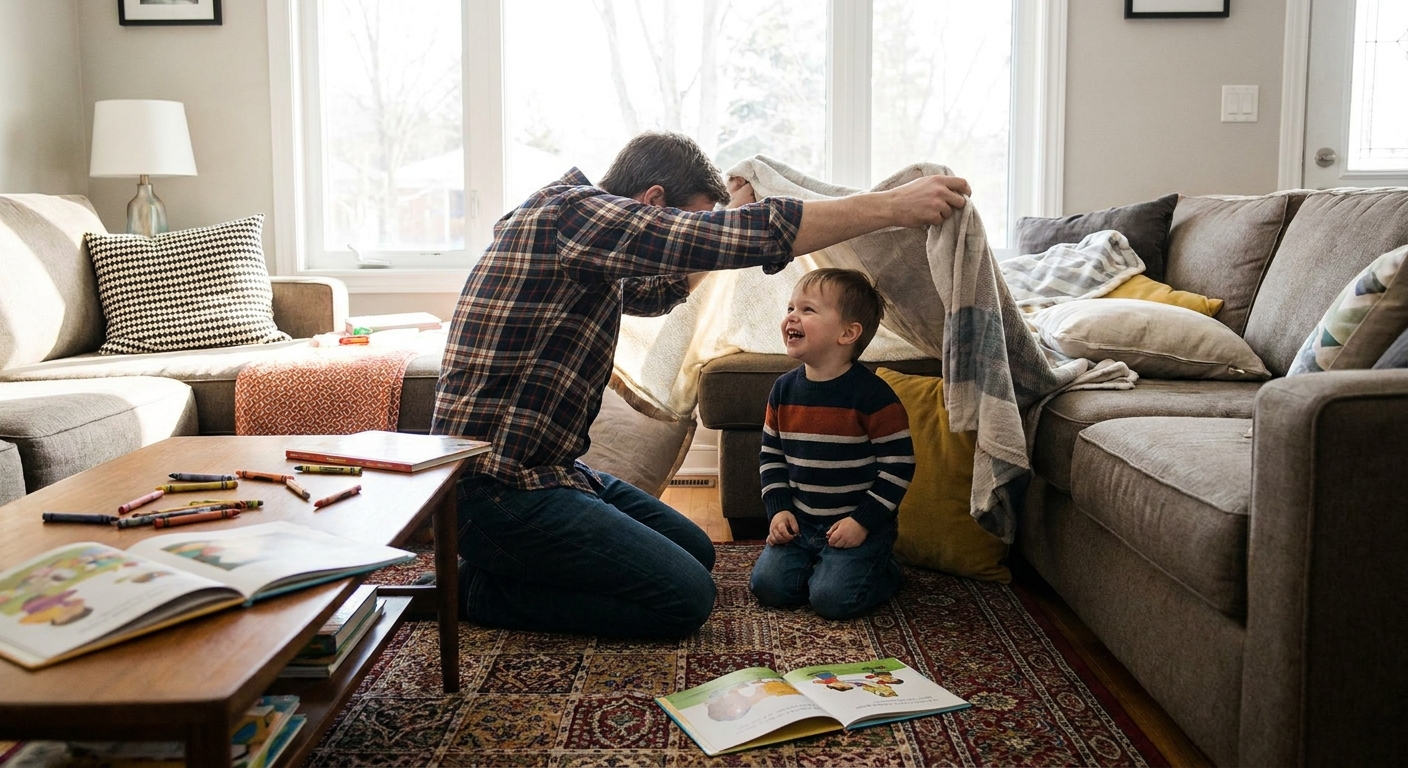
2. Indoor Fort Architect
Give them a simple challenge: "Build a fort big enough for two people to sit in." Provide:
- Blankets
- Pillows
- Clothespins or chip clips
- A flashlight
Let them design and build, stepping in only if frustration gets high.
Expert‑backed tip: Child development experts often stress the value of unstructured problem‑solving. Resist fixing the fort for them; instead, ask, "What else could you try?"
3. Board‑Game Remix
Pull out a simple board game and invite your child to change one rule.
- “What happens if we go backwards instead of forwards?”
- “What if we get an extra turn for rolling a 6?”
Play their version and talk afterward: "What did you like about your new rules?"
Why it works:
- Builds creativity and flexible thinking.
- Gives kids a sense of control on a day when everything else (including the weather) feels out of their hands.
When You’re Exhausted: Low‑Energy Wins
Some days, the goal is simply to make it to bedtime with everyone mostly okay. That’s valid.
1. Read‑Aloud Nest
Pile blankets and pillows, dim the lights, and read a stack of picture books. Let your child turn the pages or choose voices for the characters.
Helpful tweak: If your voice is tired, use audiobooks and just cuddle and look at the pictures together.
2. "Help Me" Tasks
Kids often love being helpful. Turn chores into connection:
- Ask a toddler to match socks.
- Invite a preschooler to spray and wipe a low table (with kid‑safe cleaner).
- Let a 7‑year‑old sort books by size or color.
Name their effort: "Thank you, that really helps me." You’re getting things done and giving them a sense of purpose.
It’s Okay If Not Every Activity Is a Hit
You might plan something thoughtful and your child lasts… six minutes. That’s normal. Attention spans are short, especially on restless days.
Try to remember:
- You’re not failing if an activity flops.
- Kids often circle back to things later.
- Your presence matters more than the plan.
Even 10 minutes of focused play can fill a child’s emotional tank.
A Gentle Reminder for Parents
Rainy days can press every button you have. Noise, mess, whining—it adds up. If you lose your patience, you’re human.
When that happens:
- Take a short reset: bathroom break, deep breaths, a glass of water.
- Name your feelings in front of your child: "I’m feeling a bit overwhelmed, so I need a quiet minute."
You’re modeling healthy coping, which may be the most valuable lesson of all.
Build Your Own Rainy Day Ritual
Pick one activity from this list that feels doable, not perfect. Do it today. If it helps even a little, add it to your family’s rainy day routine.
Over time, these small, simple traditions become the cozy memories your kids will remember: forts in the living room, kitchen drum concerts, and the feeling of being safe and loved while the rain tapped at the windows.