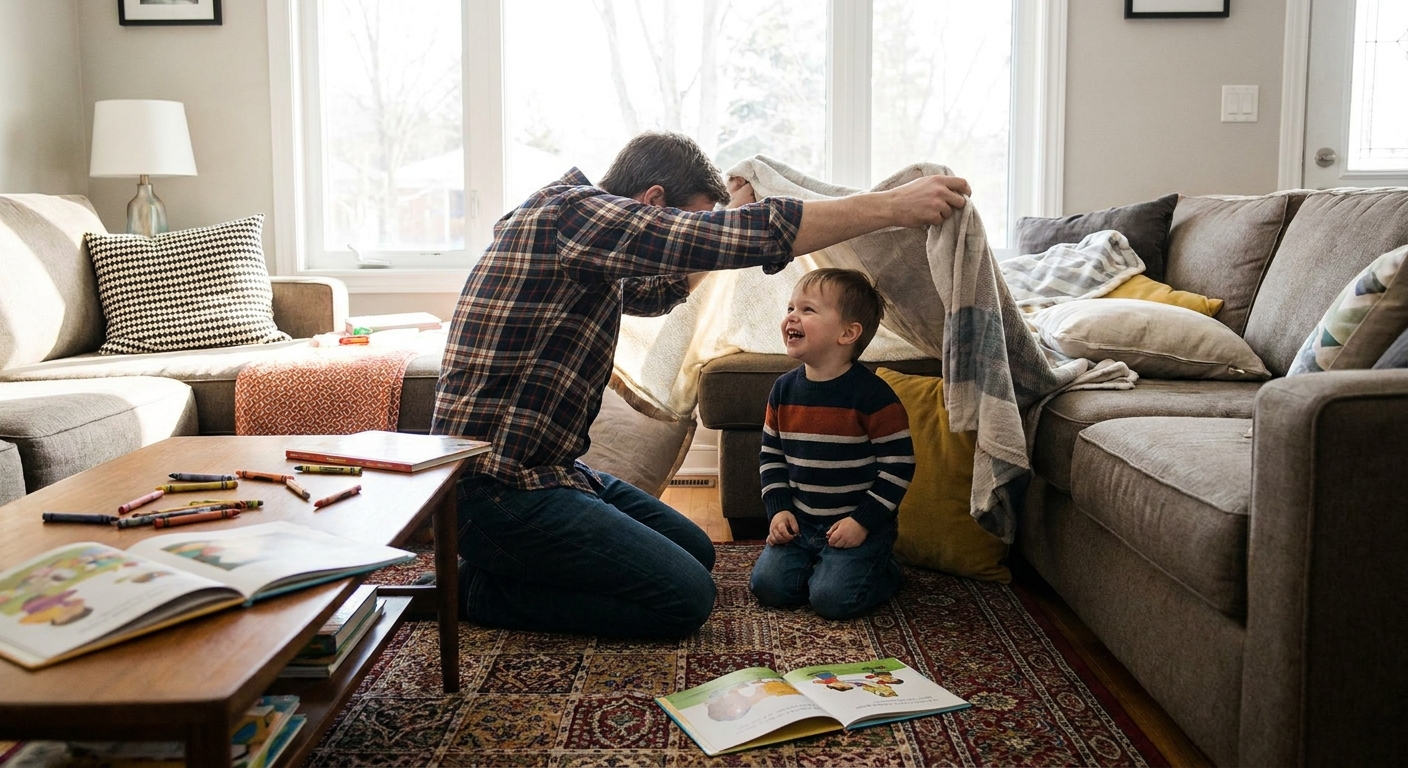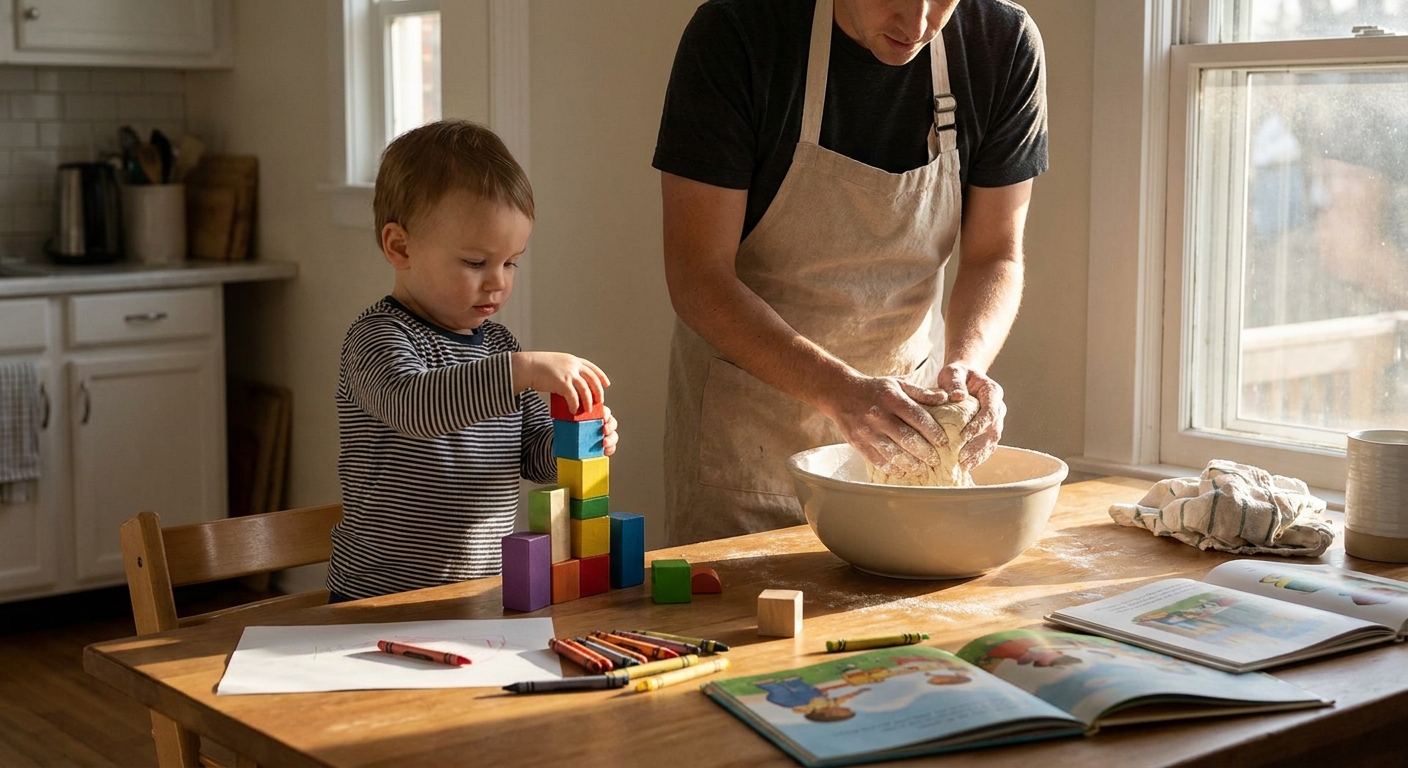
So many parents worry: "Am I doing enough to help my child learn?" The good news is that you don’t need fancy toys or packed schedules. The everyday things you already do can shape your child’s brain in powerful ways.
The Secret Power of Ordinary Play
This guide shows you how to turn simple daily moments into gentle learning opportunities—without turning your home into a classroom.
Ages 1–2: Learning Through Doing (and Repeating!)
Toddlers learn best by exploring, copying you, and doing the same thing over and over. That repetition is their brain wiring itself.
1. The Great Sock Sort
What to do:
- Dump clean socks on the couch or floor.
- Invite your toddler to help find “friends” (matching pairs).
- "Can you find another sock like this one?"
- "This one has stripes. This one is blue."
- Matching and early categorizing
- Language (colors, sizes, textures)
- Fine motor skills
Say things like:
Skills they’re building:
2. Water Helper at the Sink
Set up a safe step stool and a basin or tub on a towel-covered chair.
Invite your toddler to:
- Wash plastic cups or toys in soapy water
- Rinse with a small pitcher or measuring cup
- Sensory experience (water temperature, bubbles)
- Practice with pouring and hand‑eye coordination
- Early responsibility: "You’re helping wash!"
Why it’s powerful:
Safety: Always stay close and use warm, not hot, water.
Ages 3–4: "I Can Do It!" Activities
Preschoolers crave independence and love feeling capable. You can lean into that while quietly building key skills.
1. Snack Prep Sous‑Chef
Pick one simple snack your child can help with regularly.
Ideas:
- Spreading cream cheese or nut/seed butter on crackers with a butter knife
- Peeling a banana and slicing with a child-safe knife
- Washing grapes in a colander
- Show slowly once.
- Step back and let them try.
- Expect spills and mistakes.
- Sequencing (first we wash, then we cut)
- Fine motor control
- Confidence: "I can make my own snack."
How to make it work:
What they’re learning:
2. Toy Veterinarian Corner
Grab a few stuffed animals, a spoon as a “stethoscope,” and a small notebook.
Invite your child to be the vet:
- "What’s wrong with Bear today?"
- "How can we help him feel better?"
Expert insight: Role‑play activities like this are linked to better empathy and social understanding. Your child practices caring for others and naming feelings.
You can add:
- Drawing “X‑rays” in the notebook
- Making a cozy “recovery bed” out of a folded towel
Ages 5–7: Little Thinkers, Big Questions
As kids get closer to school age and early elementary, their questions multiply. This is your chance to turn curiosity into confidence.
1. Question of the Day Jar
Keep a jar and some folded papers nearby. Once a day, your child pulls a question.
Examples:
- "What made you laugh today?"
- "If you could be any animal, which would you be? Why?"
- "What’s something you’re really good at?"
Talk for 5–10 minutes while you prep dinner or fold laundry.
Why it matters:
- Builds emotional vocabulary
- Strengthens your connection and their sense of being heard
- Encourages reflection and early critical thinking
2. Tiny Treasure Hunt Math
Create a simple indoor scavenger hunt:
"Find:
- 3 things that are circles
- 2 things that are soft
- 4 blue things
"
Let them gather objects and count them with you.
Sneaky learning:
- Counting and one‑to‑one correspondence
- Sorting by attributes (color, shape, texture)
- Following multi‑step directions
Ages 7–9: Let Them Teach You
By this stage, children light up when they get to be the expert. You can use that pride to deepen their learning.
1. Teach‑Back Time
After they learn something new at school (fractions, planets, a science experiment), invite them to “teach” it to you or a younger sibling.
Ask:
- "Can you show me how your teacher explained it?"
- "What’s one interesting fact you remember?"
Expert‑backed reason: Teachers often say they truly know a topic once they’ve taught it. Kids are the same—teaching solidifies knowledge.
2. Plan the Afternoon
Give your child a simple framework:
"We have 2 hours. We need:
- 20 minutes for a tidy‑up,
- 30 minutes of something active,
- Some rest time.
You plan the rest."
Let them draw or write a rough "schedule." Follow it as closely as you reasonably can.
What they’re practicing:
- Time awareness
- Balancing responsibilities and fun
- Decision‑making and compromise
Balancing Guidance and Freedom
A helpful rule of thumb:
- Under age 4: You lead most of the structure.
- Ages 4–6: Share decisions ("Which of these two jobs do you want?").
- Ages 7–9: Let them lead more, while you set clear boundaries.
You don’t need to orchestrate every moment. Just gently shape the everyday things you already do.
When You Feel You’re Not Doing Enough
It’s easy to compare yourself to activity‑packed social media posts. Remember:
- Ten minutes of focused, warm attention beats an hour of half‑distracted “enrichment.”
- Your child doesn’t need constant stimulation; they need connection and room to explore.
- Boredom can be a doorway to creativity, not a problem you must always fix.
- Let them wash plastic dishes.
- Read one story aloud.
- Sort socks together.
On tough days, pick one simple activity:
Those tiny moments, done consistently, quietly build your child’s brain—and their sense that home is a safe, loving place to grow.