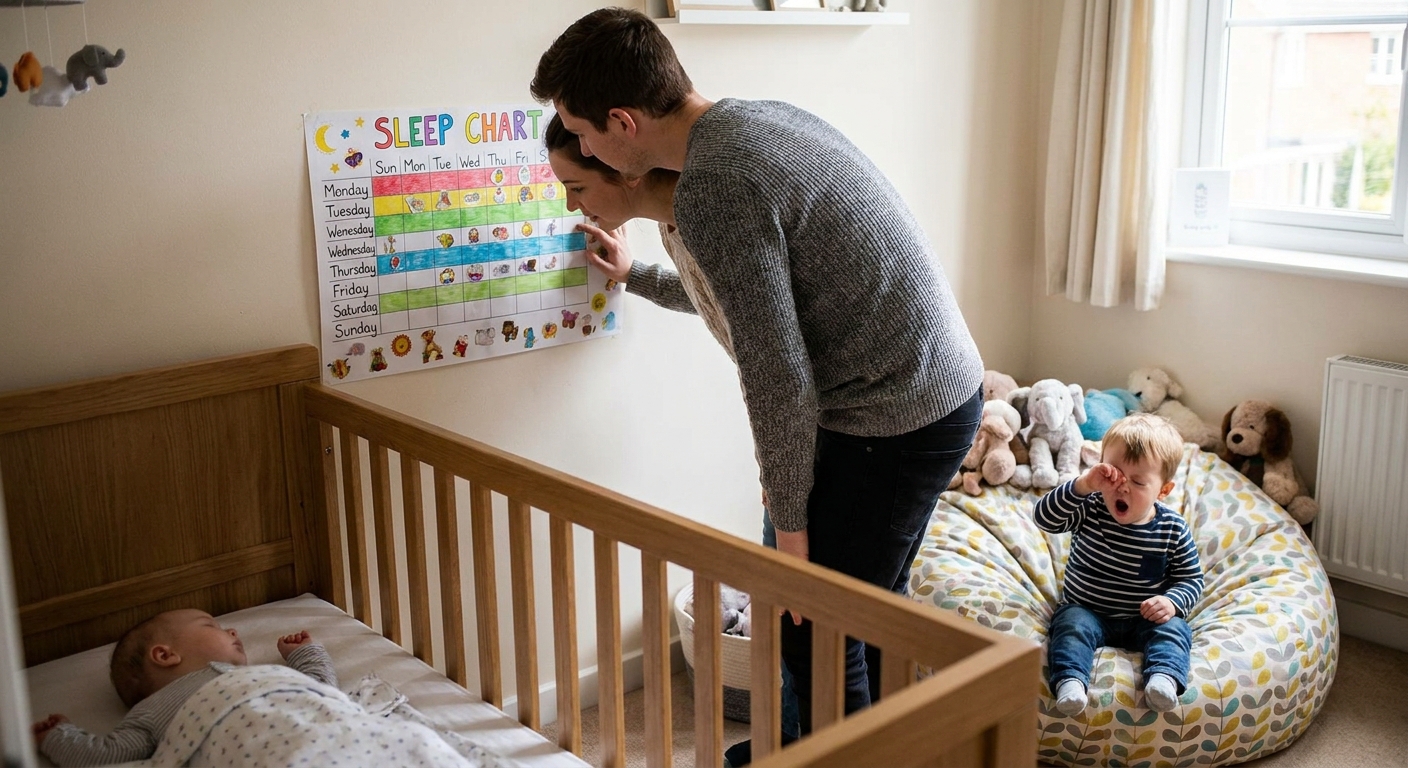
If bedtime at your house feels more like a wrestling match than a peaceful wind-down, you’re not alone. Most parents of babies, toddlers, and preschoolers struggle with sleep at some point. The good news: kids are wired to love routine. Once you find a rhythm that works for your family, nights can become much calmer.
Why Bedtime Feels So Hard (and Why It’s Not Your Fault)
This guide walks you through building a bedtime routine that feels cozy, realistic, and flexible enough to handle real life.
What a Bedtime Routine Really Does for Kids
A bedtime routine isn’t just about getting pajamas on at the same time every night. It’s a series of predictable steps that sends your child’s brain a clear message: “Sleep is coming, and you’re safe.”
Sleep experts talk about three big benefits:
- Predictability lowers anxiety. Knowing what comes next helps kids (and adults) relax. That makes it easier to fall asleep.
- Body cues kick in. Repeating the same steps trains your child’s body to start winding down at that time.
- Connection fills the tank. Calm, loving attention at bedtime helps many kids separate more easily and sleep more deeply.
Think of your routine as a “landing strip” for sleep, not an on/off switch.
Age-by-Age Bedtime Basics
Every child is different, but here are gentle guidelines to help you set realistic expectations.
Babies (0–12 months)
- Awake windows: Young babies can usually stay awake 45–90 minutes at first, then 2–3 hours by 6–9 months.
- Total sleep in 24 hours: Often 12–16 hours (including naps).
- Night wakes: Normal and expected, especially for feeding and comfort.
- A short, predictable pre-sleep routine (5–15 minutes at first)
- Lots of cuddling, dim lights, and calm voices
- Helping baby fall asleep in a way that you can keep doing (rocking, feeding, patting, etc.)
Focus on:
Toddlers (1–3 years)
- Total sleep: About 11–14 hours in 24 hours (including 1–2 naps, then down to 1, then none).
- Common challenges: FOMO (fear of missing out), boundary testing, and a big jump in imagination.
- A consistent bedtime window
- Clear, gentle limits
- Extra time for connection (stories, snuggles, talking about their day)
Focus on:
Preschoolers (3–5 years)
- Total sleep: Around 10–13 hours.
- Common challenges: Dropping naps, nightmares, and more independence.
- Protecting enough nighttime sleep as naps fade
- Calming activities before bed (not screen-based)
- Reassurance around fears and worries
Focus on:
The 4-Part Bedtime Routine Template
You don’t need a complicated Pinterest-worthy plan. Most effective routines have four parts, which you can adjust for any age:
Signal: A clear cue that the day is winding down
Care: Taking care of bodies (baths, pajamas, teeth)
Connection: Filling up their emotional cup
Sleep step: How they actually fall asleep
Example: Toddler Bedtime Routine (20–30 minutes)
Signal (5 minutes)
- Turn off bright lights - Turn on a dim lamp or nightlight - Announce calmly, “In five minutes, we start bedtime.”
Care (5–10 minutes)
- Bath or warm washcloth wipe-down - Diaper change or potty - Pajamas and sleep sack or blanket
Connection (10–15 minutes)
- 1–2 short books - Simple bedtime song - Short chat: “What was your favorite part of today?”
Sleep step (variable)
- Rocking, patting, or lying calmly next to them - White noise and dim room - Leaving the room when they’re asleep or drowsy, depending on your approach
You can shrink or stretch this structure for babies and preschoolers, but the pattern stays the same.
Real-World Example: When Bedtime Takes Hours
Scenario: 3-year-old Mia suddenly takes 90 minutes to fall asleep. She keeps asking for more water, more songs, more everything.
What’s going on?
Mia is testing boundaries and genuinely needing connection after a busy day. She’s also possibly not tired enough at bedtime.
What helped:
- Adjusted bedtime: Her parents gradually moved bedtime 20–30 minutes later so she was more tired.
- “Last chance” routine: They created a simple script:
- Extra connection earlier: They added 10 minutes of 1:1 playtime right after dinner so bedtime felt less like the only chance for attention.
- Calm consistency: When Mia asked for more at bedtime, her parents repeated kindly, “We’re all done for tonight. I’ll see you in the morning.”
“This is your last drink of water. This is your last song. Which song do you choose?”
Within a week, bedtime shrank from 90 minutes to around 25.
Expert-Backed Tips for Smoother Evenings
1. Aim for a Consistent Window, Not a Perfect Time
Sleep specialists often suggest a 30–60 minute bedtime window instead of a rigid time. Watch these cues:
- Slower movements
- Staring into space
- Rubbing eyes or ears
- Clinginess or extra silliness
Try to start your routine at the first signs of tiredness, not the meltdown stage.
2. Use Light and Darkness
- Keep things bright and active during the day.
- Start dimming lights 30–60 minutes before bedtime.
- Use blackout curtains if mornings are too bright.
This supports your child’s natural melatonin production (the hormone that helps us feel sleepy).
3. Protect the Wind-Down Zone
In the hour before bed, aim for:
- Yes: Puzzles, books, drawing, quiet play, baths, gentle music.
- Not ideal: Roughhousing, loud TV, exciting games, last-minute big talks about worries.
If you use screens, try to switch them off at least 45–60 minutes before sleep.
4. Repeat, Repeat, Repeat
Children learn routines through repetition. Try to keep the order of events the same, even if the exact time or length changes:
Bath → Pajamas → Brush teeth → Books → Song → Lights out
That order becomes a powerful sleep signal over time.
5. Build in Choices (Within Boundaries)
Offering simple choices during the routine gives kids a sense of control:
- “Red pajamas or blue pajamas?”
- “This book or that book?”
- “Brush teeth first or pajamas first?”
You stay in charge of when bedtime happens; they get to help with how it happens.
When Things Don’t Go as Planned
There will be nights when everything falls apart—late dinners, skipped baths, overtired kids, sick days, visitors, travel.
On those nights:
- Keep one or two anchors. Maybe you skip the bath but still do pajamas, one story, and a song.
- Shorten, don’t scrap. A 5-minute routine is better than none at all.
- Be gentle with yourself. One hard night does not undo all your work.
Routines are about patterns over time, not perfection.
Signs Your Routine Is Working
You’ll know your new rhythm is settling in when you notice:
- Your child starts yawning or getting calm at routine time
- Bedtime battles get shorter or less intense
- You feel less dread as evening approaches
- Nights aren’t perfect, but they’re more predictable
Progress is often slow and in waves. Two good nights, one rough one, three okay nights—that still counts as moving forward.
A Gentle Reminder for Tired Parents
If you’re reading this with bleary eyes, wondering if you’ll ever feel rested again, please hear this: you are not doing it wrong. Sleep in early childhood is bumpy for almost every family.
You don’t have to fix everything at once. Pick one small change for this week:
- Start bedtime 15 minutes earlier
- Add one calming song
- Dim the lights 30 minutes before bed
- Read one short book together each night
Tiny, consistent steps are powerful. Over time, they add up to something that feels like magic—a bedtime that’s less chaos, more cozy. And you and your child both deserve that.