If bedtime is consistently wild—kids bouncing off the walls, tears, endless requests—there’s a good chance the trouble starts long before you say, “Time for bed.”
Why the Hour Before Bedtime Matters So Much
Sleep specialists often talk about “sleep hygiene,” but that phrase can feel cold and clinical. Think of it instead as creating a Calm-Down Hour: a gentle landing strip between the busy day and cozy sleep.
This guide gives you a step-by-step, real-world plan you can adapt for babies, toddlers, and preschoolers.
Step 1: Pick Your Calm-Down Window
Your Calm-Down Hour doesn’t have to be exactly 60 minutes. For some families, 30–45 minutes is more realistic. The key is to have a protected block of time where the energy starts shifting downward.
How to choose your timing
Decide on a rough bedtime that fits your child’s age and routine:
- Babies: often somewhere between 6–8 p.m. - Toddlers: usually 7–8:30 p.m. - Preschoolers: often 7:30–9 p.m. 2. Work backward 30–60 minutes. That’s your Calm-Down window.
Real example:
If you aim for an 8:00 p.m. lights-out for your 3-year-old, your Calm-Down window might be 7:00–8:00 p.m.
It’s okay if this shifts with life—dinner, activities, or siblings. The goal is consistency most days, not perfection.
Step 2: Shift the Environment from “Day” to “Night”
Children take powerful cues from their surroundings. A few simple changes send a clear message: “The day is ending; it’s time to slow down.”
Make the room do some of the work
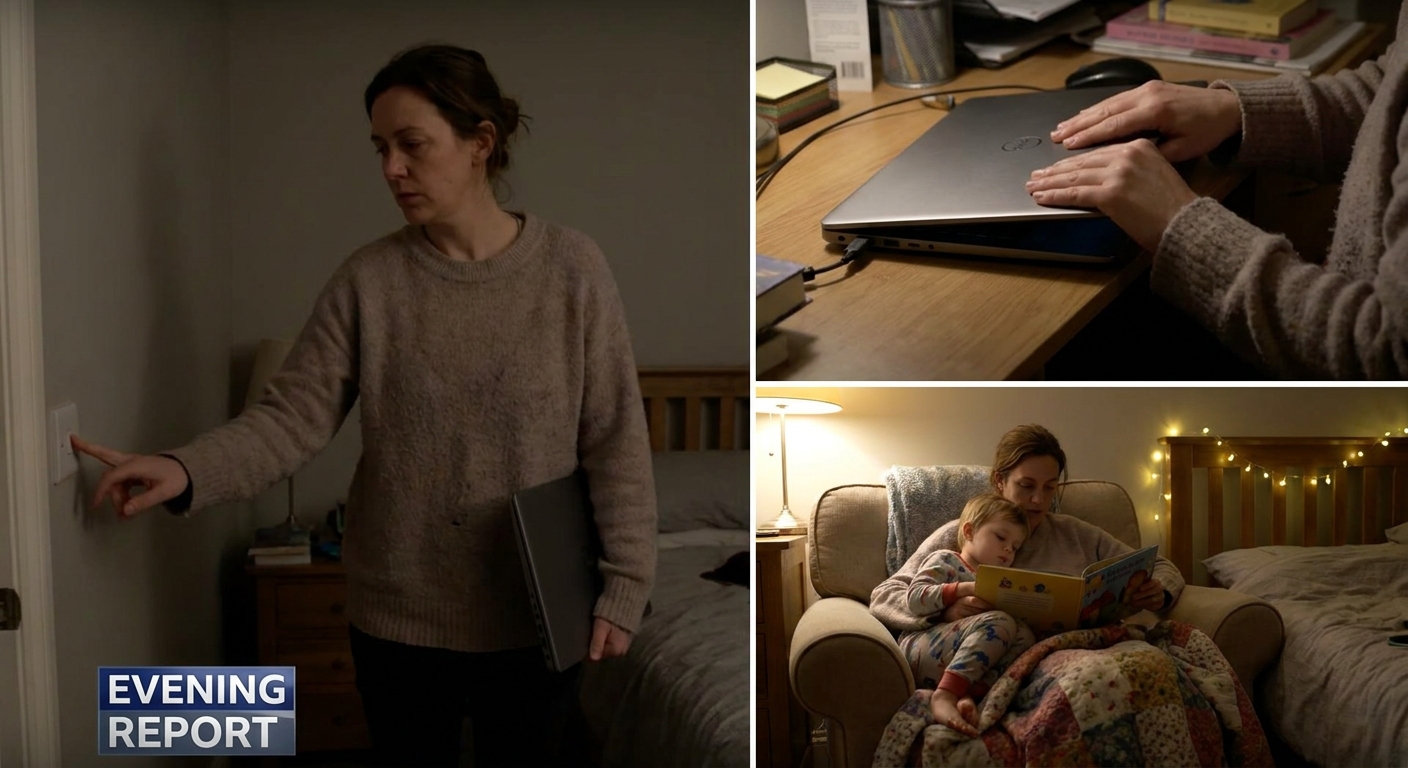
- Dim the lights. Lower overhead lights and use lamps or nightlights.
- Turn down the volume. Reduce loud music, TV noise, and roughhousing.
- Close the curtains. Even if it’s light outside, this can signal “night mode.”
Create a little ritual to mark the shift
For example:
- “Let’s switch to our sleepy lights now,” and turn on a soft lamp.
- Play a specific “wind-down” playlist or gentle lullaby playlist every evening.
- Light a (safe, out-of-reach) scented candle for you, or use a calming room spray.
Over time, these cues become powerful sleep signals for your child.
Step 3: Choose Calming Activities That Actually Work
You don’t need an elaborate plan. The idea is to move from high-energy, high-stimulation activities to quiet, repetitive ones.
Baby-friendly options (0–12 months)
- Gentle baby massage with lotion after bath
- Soft singing or humming while you sway
- Looking at a simple board book together
- A short walk around the darkened house saying goodnight: “Goodnight, couch. Goodnight, kitchen.”
Toddler-friendly options (1–3 years)
- Simple puzzles or blocks
- Looking at picture books together
- Coloring or stickers at the table
- Playing “spa” with warm washcloths and pretend lotion
Preschool-friendly options (3–5 years)
- Drawing or simple crafts
- Calm pretend play (stuffed animals going to bed, doctor’s office, etc.)
- Listening to an audiobook or story podcast
- Doing a kids’ yoga or stretching routine
Try to avoid introducing new or very exciting toys during this window—familiar, low-key activities are smoother.
Step 4: Create a Predictable Pre-Bed Sequence
Within the Calm-Down Hour, you’ll have a shorter, repeatable bedtime sequence. This might only be 15–30 minutes long, but the order matters. Kids feel safe when events are predictable.
Here’s a simple framework you can adapt:
Clean & Cozy – bath or quick wipe-down, pajamas, diaper or potty, teeth
Connect & Reflect – books, cuddles, talking about the day
Settle & Sleep – song, white noise, lights out, final comfort
Sample plan for a 2-year-old (45–60 minutes total)
- 7:00 p.m. Quiet play in the living room with dim lights (puzzles, blocks)
- 7:15 p.m. Bath time (or every other night), then pajamas and diaper
- 7:30 p.m. Brush teeth together (maybe sing a toothbrushing song)
- 7:35 p.m. Choose two books in the bedroom and read them snuggled up
- 7:45 p.m. Sing one or two songs, say goodnight to favorite toys
- 7:50 p.m. Lights out, white noise on, cuddle or pat to sleep
Even if the clock times change some days, keeping the sequence steady is key.
Step 5: Use “Sleep Language” to Narrate the Routine
Children are comforted by familiar words. Using the same phrases each night can be surprisingly powerful.
Examples:
- “First bath, then pajamas, then books.”
- “After we read, it’s time for sleep.”
- “The house is going to sleep now. The lights are going off.”
With babies, you might softly repeat:
- “Sleepy time now, I’m right here.”
- “It’s dark and cozy. Time to rest.”
This predictable language becomes part of the safety net that helps them relax.
Step 6: Handle Last-Minute Requests with Compassion and Limits
Toddlers and preschoolers are famous for needing one more everything.
Rather than battling every night, build in structure:
- Water: Offer a last small drink during the routine. Then: “This is the last water. After this, water is all done until morning.”
- Books: Decide on a number and stick to it. “Tonight you can pick two books.”
- Questions: Set a boundary: “You can ask two questions, then we’ll say goodnight.”
When the inevitable “just one more” comes:
- Stay calm and kind: “I hear you want more books. We’re all done for tonight. We’ll read more tomorrow.”
- Stick to your script, even if there are tears. Routine plus calm, consistent limits is what eventually reduces the battles.
Real-World Example: Two Kids, One Calm-Down Hour
Family: 4-year-old Leo and 16-month-old Emma
Challenge: Evenings feel chaotic, with both kids melting down in different ways.
Their Calm-Down Hour plan:
- 6:30 p.m. Dinner ends, screens off, lights dimmed.
- 6:35 p.m. All three go to the bathroom: Leo tries potty, Emma gets diaper change.
- 6:40 p.m. Quiet play in the living room: Leo does a simple puzzle; Emma stacks blocks next to a parent.
- 6:55 p.m. Bath together a few nights a week; on other nights, warm washcloth wipe-down.
- 7:10 p.m. Pajamas, lotion, and a quick “massage train” (each child gets 1–2 minutes of gentle back rubs).
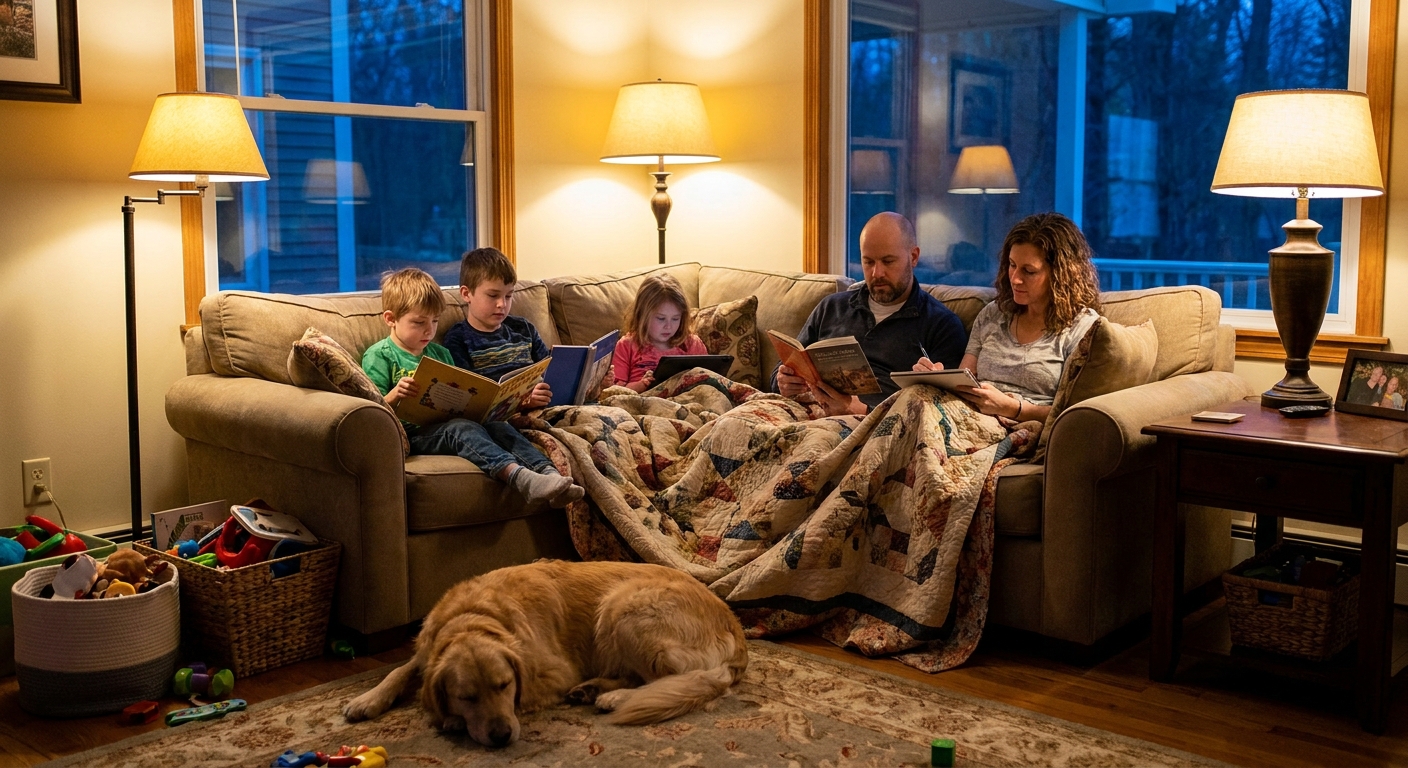
- 7:15 p.m. One family story on the couch.
- 7:25 p.m. Parent A takes Emma to her room: lullaby, feed, lights out.
- 7:25 p.m. Parent B takes Leo to his room: one more story, then a song, lights out.
It didn’t become peaceful overnight, but within two weeks, the kids started yawning during the same story every night. That predictability made everything easier.
Expert-Backed Sleep Helpers (That Don’t Require Sleep Training)
- Consistent wake time: Within 30 minutes each day, when possible. This anchors the body clock.
- Daytime movement: Outdoor time and physical play make it easier for kids to settle at night.
- Predictable meals and snacks: Hungry or very full tummies can disrupt sleep.
- Comfort at night: Responding to cries with calm reassurance builds trust, which actually supports better sleep over time.
When Your Calm-Down Hour Gets Derailed
Life will interrupt even the best routine—late work days, visitors, teething, sickness, travel.
On those nights:
- Keep one or two anchors (like books and a song), even if everything else is rushed.
- Narrate what’s happening: “Tonight was busy, so we’re doing a short bedtime. We still have time for one special story.”
- Return to your usual Calm-Down Hour as soon as you reasonably can.
Routines are resilient. A few off nights won’t undo your hard work.
A Gentle Final Thought
You don’t have to create a magazine-worthy bedtime ritual. You just need something simple, repeatable, and kind.
If this feels overwhelming, choose just one small step today:
- Dim the lights 30 minutes before bed.
- Read a single book together every night.
- Turn off screens after dinner.
Those tiny shifts send a loud message to your child’s body and brain: “It’s safe to slow down now.” Over time, your Calm-Down Hour can become one of the coziest, most connected parts of your day—for both of you.