If you’ve ever scrolled past a photo of a spotless table, color-coordinated plates, and children calmly eating quinoa salad… and then looked at your own kitchen and wanted to laugh/cry, you’re not alone.
The Myth of the Perfect Family Dinner
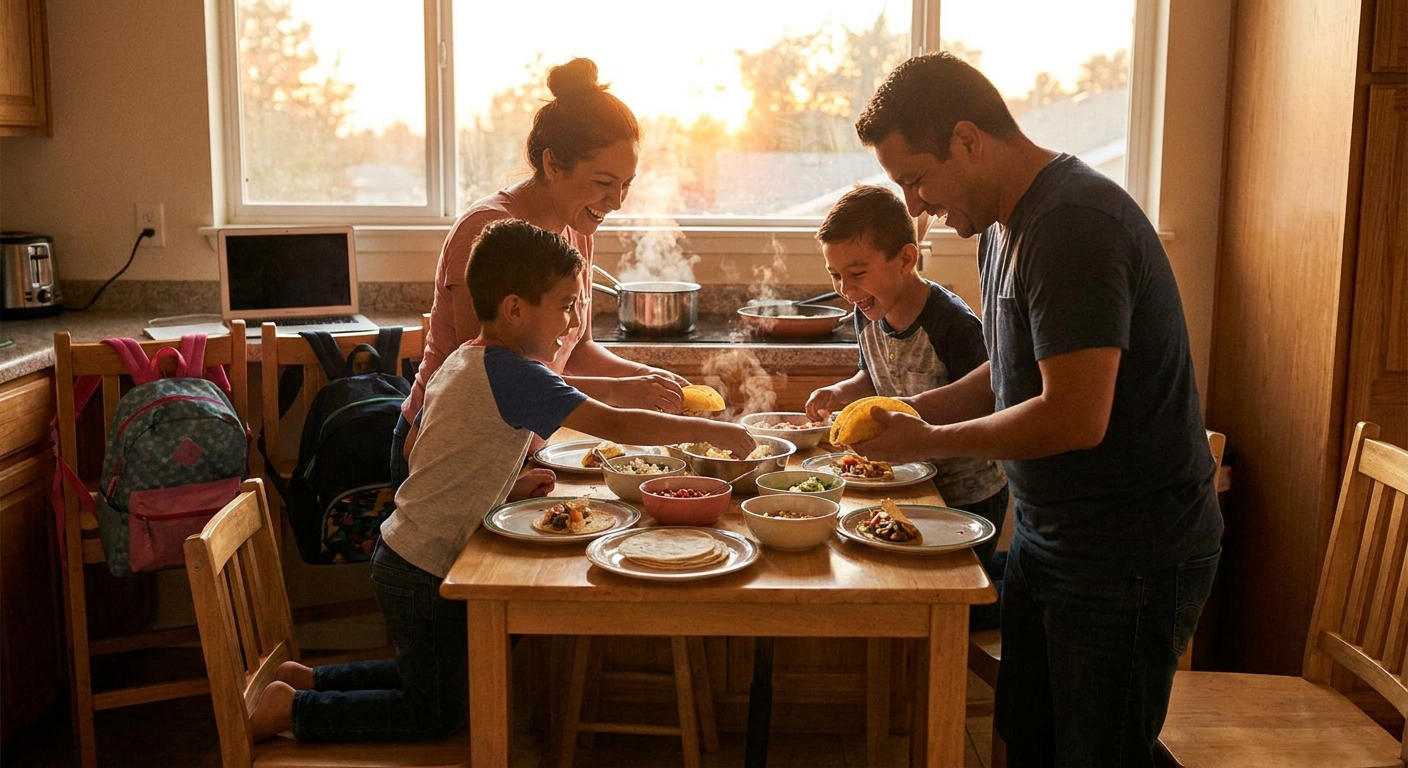
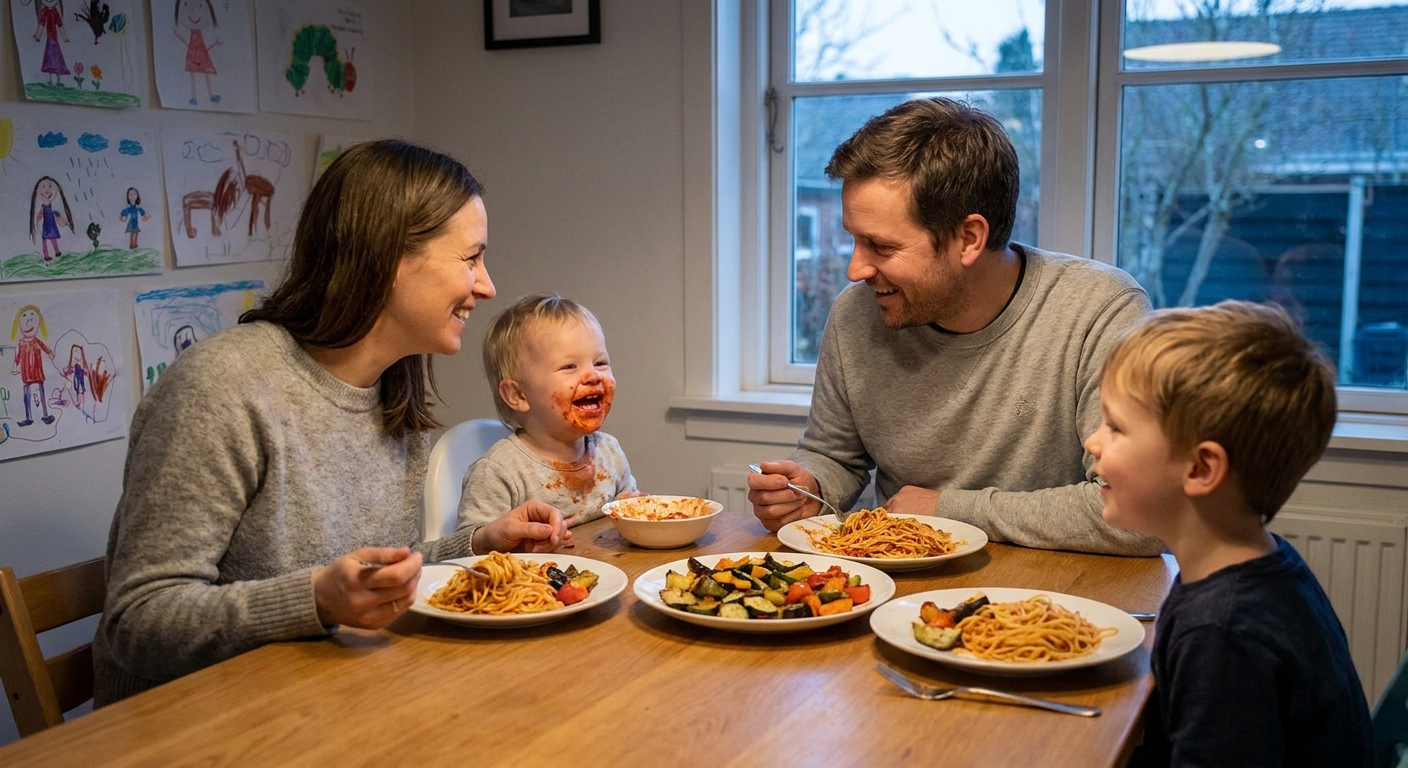
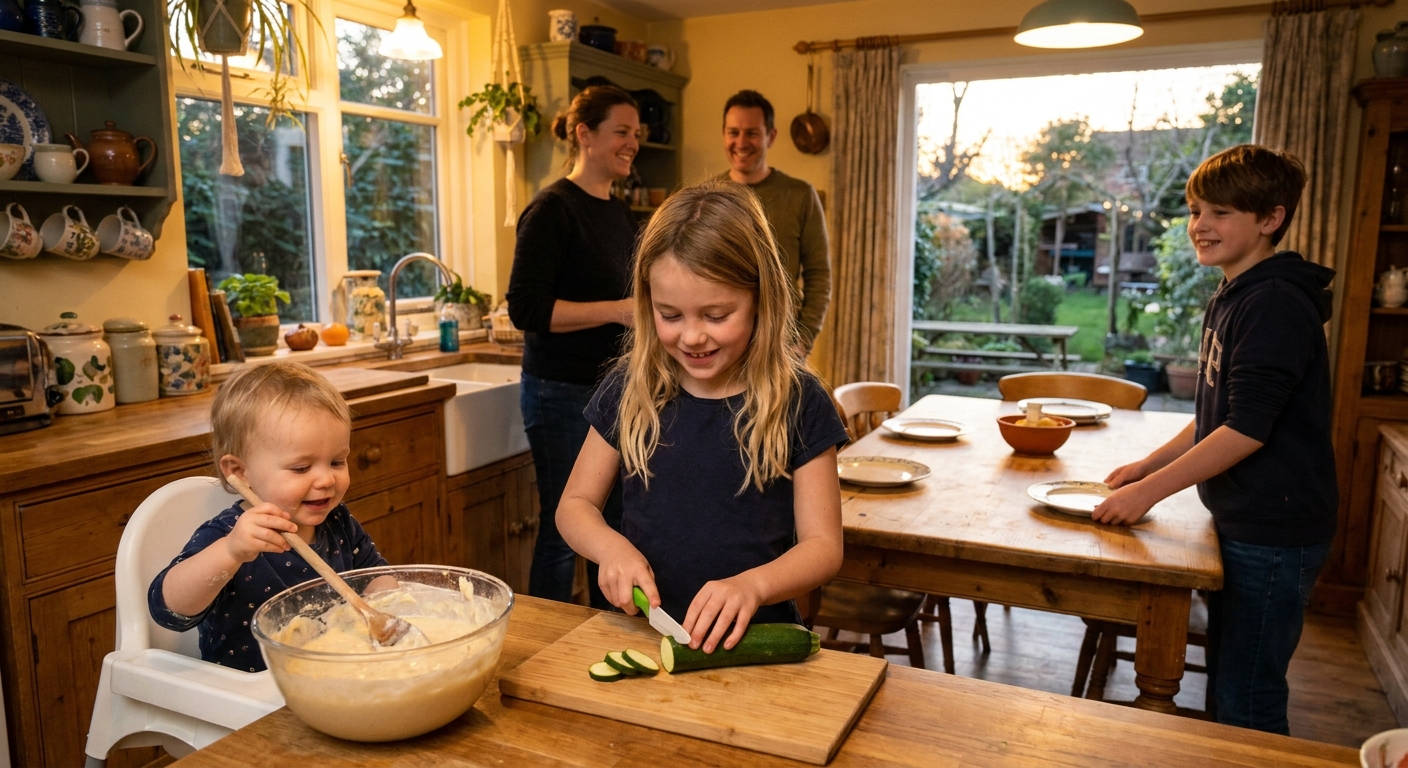
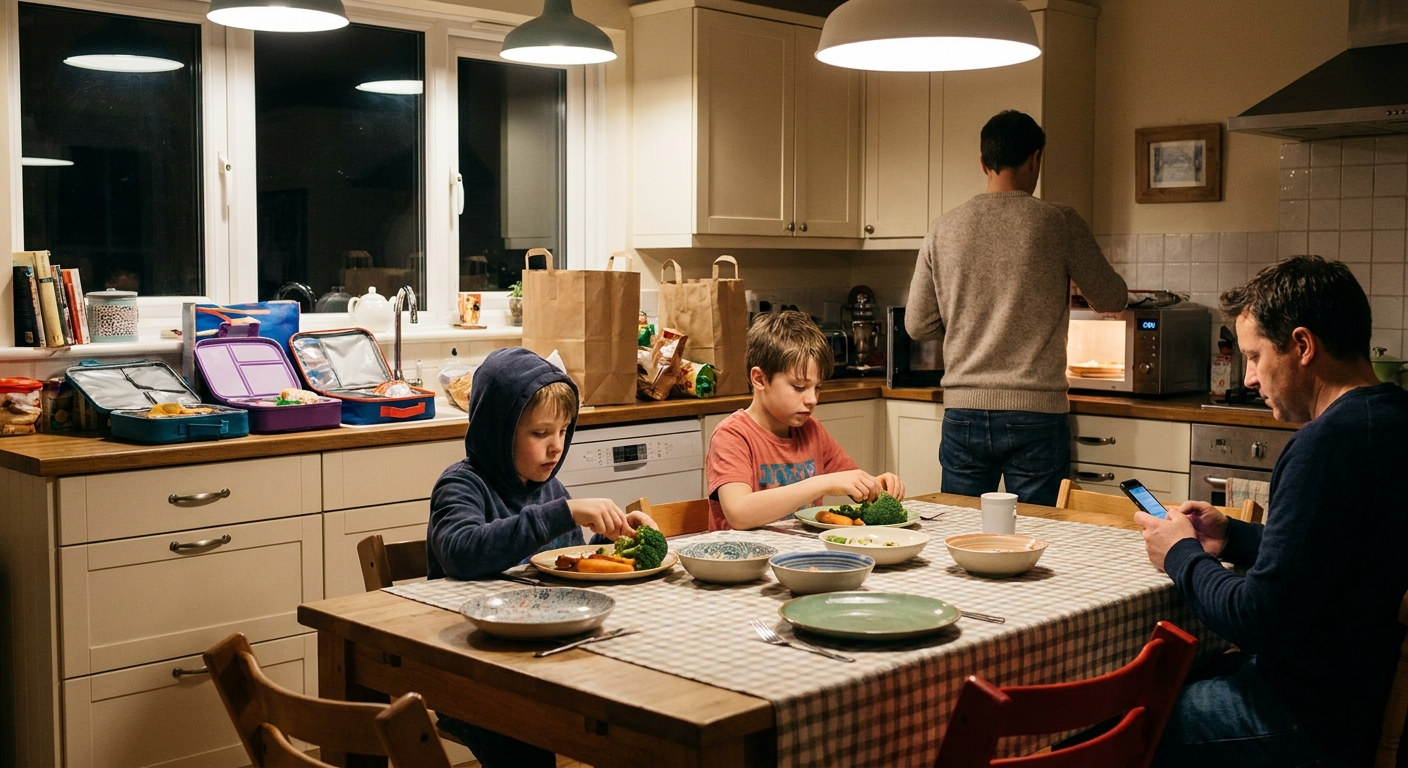
Real family meals with young kids look more like this:
- Someone drops a fork.
- Someone needs to pee mid-bite.
- Someone announces, “I don’t like this,” even if they ate it yesterday.
That chaos doesn’t mean you’re doing it wrong. It means you’re in it—raising actual children, not stock-photo models.
Let’s gently compare the myths of family meals with what experts say actually supports healthy, happy eaters.
Myth 1: “Healthy family meals must be homemade and from scratch.”
The Instagram version:
- Fresh farmers’ market veggies every night
- Handmade sauces
- Bread you kneaded yourself while your child quietly colored
Real-life, expert-backed truth:
What matters most is structure, variety over time, and emotional tone, not whether every item is homemade.
It’s okay—actually, normal—to rely on:
- Frozen veggies
- Canned beans
- Pre-cooked grains or rotisserie chicken
- Jarred sauces
A balanced meal with some convenience foods can be just as nourishing as a scratch-cooked one.
A realistically balanced plate for kids might look like:
- Dino nuggets
- Frozen peas with a pat of butter
- Whole wheat toast
- Apple slices
That absolutely counts.
Myth 2: “Kids should sit nicely and eat what’s served.”
The idealized version:
Children sit still, try everything, and say, “Thank you for this nutritious dinner, parent who I deeply appreciate.”
The child-development reality:
- Toddlers and preschoolers have short attention spans.
- Many go through a picky eating phase between 2–5 years.
- They’re learning to listen to hunger and fullness cues.
A developmentally realistic goal is:
- 5–10 minutes of sitting for toddlers
- 10–15 minutes for preschoolers
- Exploring new foods at their own pace (even if that means licking and not swallowing)
You can support this by:
- Keeping mealtimes relaxed and reasonably short
- Having simple table routines (a song, a question, a cleanup task)
- Avoiding pressure and bribes around bites
Myth 3: “If my child doesn’t eat well at dinner, I’ve failed.”
The worry:
“If she barely touches dinner, she’ll wake up starving. Did I do something wrong? Should I cook something else?”
The nutrition reality:
Dietitians remind us: kids’ intake balances out over days and weeks, not per meal.
What this means:
- One “off” meal isn’t a crisis.
- A light dinner often follows a big snack or lunch.
- Some kids genuinely eat more earlier in the day.
Instead of chasing perfection at each meal, zoom out:
- Did they have some variety this week (fruits, veggies, grains, protein, fats)?
- Are they growing and energized overall?
If so, your family meals are probably doing just fine, even if some dinners feel like flops.
Myth 4: “Family meals must be dinner, and they must happen every day.”
The Pinterest picture:
Every night at 6:00 p.m., everyone gathers for a relaxed, 45-minute dinner.
The flexible, real-world option:
Family meals can be:
- Weekend breakfast pancakes at 9:00 a.m.
- After-school snack around the table at 3:30 p.m.
- Sunday night picnic on the living room floor.
And research suggests that a few shared meals per week can still offer the emotional and developmental benefits—connection, conversation, routine.
It doesn’t have to be daily. It doesn’t have to be dinner.
Choose what fits your family’s schedule and energy instead of forcing a standard that doesn’t.
Myth 5: “If I do everything right, my child won’t be picky.”
The quiet fear:
“If my child is picky, I messed up somewhere.”
The science-informed truth:
Picky eating is influenced by:
- Temperament (some kids are naturally more cautious)
- Sensory sensitivities
- Developmental phases
You can:
- Offer variety and repeated exposures
- Keep pressure low
- Model eating different foods yourself
But you cannot fully control your child’s preferences.
You are responsible for offering. They are responsible for deciding what goes in their mouth.
If you’re providing regular meals and snacks, offering a range of foods, and keeping mealtimes reasonably peaceful, you’re doing a solid job—even if your child currently lives on pasta and strawberries.
What Healthy Family Meals Actually Tend to Have in Common
Across all the messy, imperfect families, experts see some shared patterns.
1. A bit of structure
- Roughly predictable meal and snack times
- Food mostly eaten at a table or clear eating spot
- Short breaks between eating so kids arrive at meals with some hunger
2. A safe emotional climate
- Minimal shaming (“You’re so fussy”) or bribing (“Eat this or else”)
- Adults modeling calm eating and conversation
- Room for kids to say “No, thanks” to a food
3. Repeated exposure to variety
- New foods appearing regularly in small amounts
- Familiar “safe” foods available at each meal
- Parents offering options without demanding bites
4. Conversation and connection
- Simple check-ins: “What made you smile today?”
- Kids feeling like their voice matters at the table
- Eye contact, shared jokes, and rituals
Notice what’s missing from that list: gourmet recipes, spotless kitchens, perfectly behaved children.
A Side-by-Side Reality Check
Let’s compare a fantasy dinner and a healthy, real one.
Instagram Fantasy Dinner
- Homemade everything
- Three perfectly balanced sides
- Everyone eats everything on their plate
- Candles, cloth napkins, zero spills
Healthy Real-Life Dinner
- Frozen fish sticks, microwaved peas, instant rice
- One parent eats early, but still sits with water while kids eat
- Toddler eats rice and peas, ignores fish; preschooler eats fish and rice, skips peas
- Someone spills milk; everyone laughs and cleans up
- A 15-minute conversation about dinosaurs and who to invite to the next park playdate
Which family is building connection, routine, and trust? Both.
But only one is sustainable for most families night after night.
How to Redefine “Success” at Your Table
Instead of judging your family meals by:
- How many vegetables your child ate tonight
- Whether anyone complained about the food
Try measuring success by:
- Did we sit together, even briefly?
- Did my child see me eat and enjoy food?
- Did we keep pressure low and kindness high?
- Did we have even a few moments of conversation or silliness?
If you can say “yes” to even one or two of those, you’re planting strong seeds, even on nights that feel like a scramble.
You Don’t Need a New You, Just a Slightly Softer Lens
You’re allowed to:
- Use paper plates when the dishes are too much
- Serve cereal and fruit and call it dinner
- Have nights where the win is simply, “We all sat down at the same time”
Healthy family meals are not about staging perfection for the outside world. They’re about quietly showing your child, over and over:
This is a place where we come together. You are welcome here, just as you are.
Your meals already count more than you think.
The crumbs on the floor, the half-eaten broccoli, the short attention span—those are signs of real life, not failure.
And in real life, “good enough” family meals are more than enough for your child to grow up feeling fed—body and heart.