Almost every parent of a baby or young child has stared at the ceiling at 3 a.m. wondering, “Why are we still up?” The answer, in most cases, is simply: because your child is little, their brain is growing fast, and sleep is complicated.
Night Wakings Don’t Mean You’re Doing It Wrong
Night wakings are developmentally normal. That doesn’t mean they’re easy. But with a few gentle strategies—and some ready-to-use phrases—you can handle them with more confidence and less confusion.
Step 1: Understand the Different Kinds of Night Wakings
Not all problems at night are the same. Knowing what kind of waking you’re dealing with can help you respond calmly and consistently.
1. Hungry wakes (common in babies)
- Baby wakes, roots or looks for a feed, then usually settles again after feeding.
- More common in the first 6–9 months, but some older babies may still wake to feed.
What helps:
- Ensuring good daytime feeds.
- Offering a full feed when they do wake (if developmentally appropriate).
- Gradually, if you choose, lengthening the time between feeds as your baby grows, with your pediatrician’s guidance.
2. Habit wakes
- Your child wakes at the same time every night, often not fully upset, sometimes just expecting the usual help (rocking, patting, a bottle, etc.).
What helps:
- Gradually changing how you respond (shorter rocking, more patting in the crib, etc.).
- Slightly shifting bedtime or wake-up time if the pattern is very fixed.
3. Discomfort or illness wakes
- Child seems unusually fussy or hard to settle.
- Other signs: fever, stuffy nose, teething, tummy upset.
What helps:
- Address the root cause (medication if appropriate and approved, extra cuddling, upright position for congestion).
- Expect more frequent wakings until they feel better—and lower expectations elsewhere if you’re all tired.
4. Separation or anxiety wakes (often in toddlers/preschoolers)
- Child wakes calling for you, may be scared or clingy.
- Sometimes linked to big changes (new baby, daycare, moving, etc.).
What helps:
- Lots of connection and reassurance by day and at bedtime.
- Calm, consistent night response using gentle scripts.
Step 2: Create a Simple Night-Waking Plan
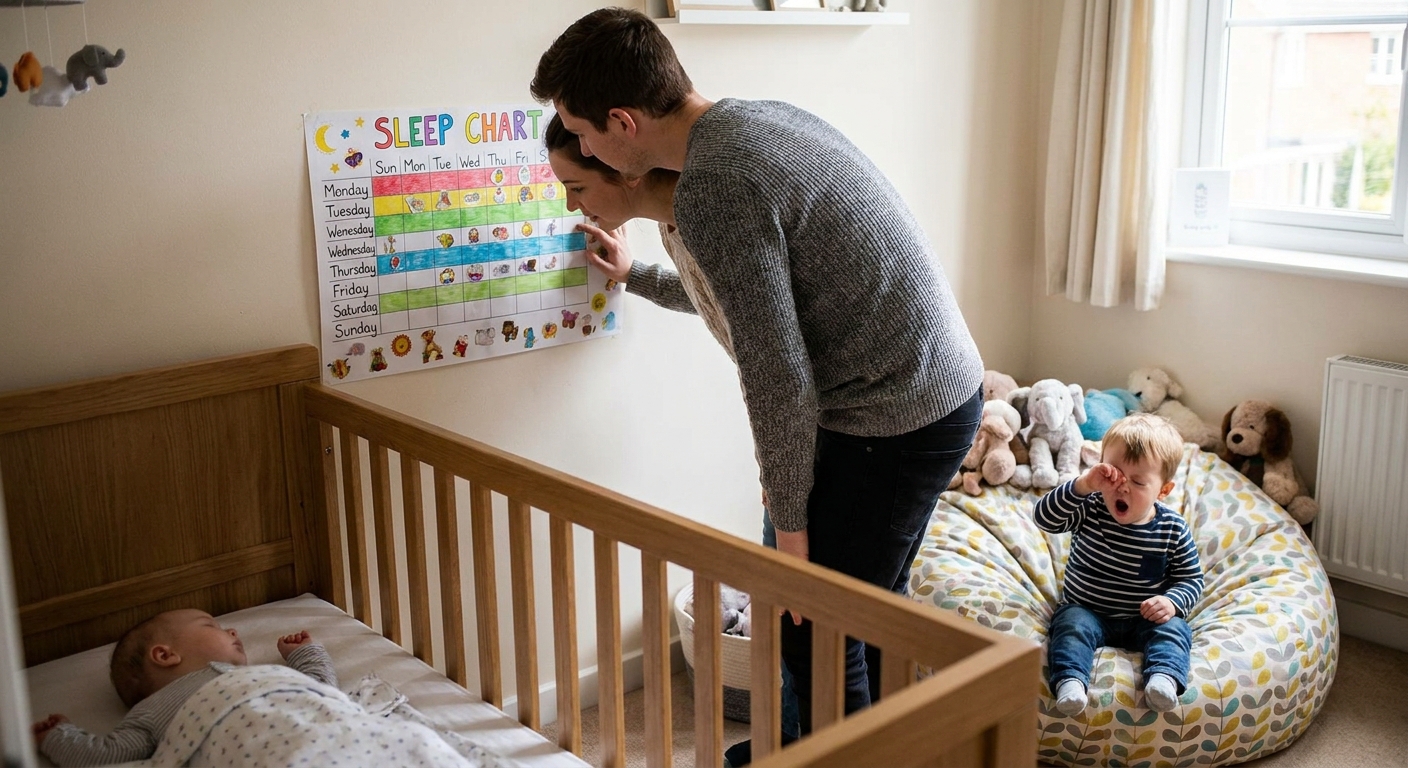
At 3 a.m., your brain is not in decision-making mode. Having a plan ahead of time reduces stress.
Questions to consider (with your partner, if you have one)
Who responds first? Will you take turns by nights or by wakes?
2. What’s our first step? (Always check for basic needs: diaper, hunger, illness.) 3. What’s our second step if they’re still upset? (Rocking, patting, holding, nursing, etc.) 4. What’s our line in the sand? For example, “No screens at night,” or “We won’t turn on big lights unless it’s an emergency.”
Write down a few key points or even a short script so you’re not inventing it in the dark.
Step 3: Gentle Scripts for Different Ages
Sometimes you know what you want to do but not what to say. Here are some simple, loving phrases you can borrow.
Babies (0–12 months)
At this age, your tone and touch matter more than your exact words. Keep your voice soft and repetitive.
- “You’re safe. I’m right here.”
- “Sleepy time, little one. I’m helping you.”
- “Shh, shh, I hear you. I’m coming.”
Try to keep stimulation low:
- Dim or no lights
- Minimal talking
- No playful interaction
This helps distinguish night from day.
Toddlers (1–3 years)
Toddlers often wake from confusion, fear, or habit. They understand simple explanations and find comfort in repeated phrases.
For a quick check-and-soothe:
- “You woke up! I’m here. It’s still sleepy time.”
- “You’re in your cozy bed. Let’s lie down together.”
For requests (water, more snuggles, etc.):
- “You can have one more sip of water, then water is all done.”
- “I’ll rub your back for one more song, then your body rests.”
For fear or bad dreams:
- “That was a dream. It felt real, but it’s not happening now. You’re safe.”
- “Would you like a big squeeze hug or a gentle back rub?”
Preschoolers (3–5 years)
Preschoolers may wake because their imaginations are vivid. They can handle slightly more information and choices.
For night fears:
- “Your brain was telling you a story while you slept. That’s a dream. Here in your room, you’re safe.”
- “Let’s take three slow breaths together, then I’ll tuck you in again.”
For repeated calls after you leave:
- “I know it’s hard to sleep. I’ll come back to check on you after a little while. You can rest while you wait.”
- “It’s my job to help you sleep and your job to stay in bed. I’ll be close by.”
Using nearly the same words each time becomes incredibly soothing.
Step 4: Comforting Without Completely Starting Over
You can be responsive at night and still protect your own sleep. It’s about how much help you give and how gradually you adjust it.
Gentle ideas to try
- Shorten the help, slowly.
If you usually rock for 20 minutes, try 18 for a few nights, then 15, then 12, and so on.
- Change location gradually.
Move from rocking chair to sitting by the crib, from holding in your arms to patting in the crib, from lying in their bed to sitting next to it.
- Add a predictably soothing cue.
A specific phrase (“It’s sleepy time”), a gentle patting rhythm, or white noise can become associated with calming down.
- Respond in stages.
For a toddler waking and calling:
- First response: verbal reassurance from the doorway.
- If still upset after a few moments: brief check-in and tuck.
- If still very distressed: short physical comfort (hug, back rub), then back to bed.
You’re showing your child: “I will help you, and I believe you can do a bit of this yourself, too.”
Real-Life Example: The 2 A.M. Party Toddler
Child: 2.5-year-old Noah
Pattern: Waking around 2 a.m. and staying awake for up to an hour, wanting to chat and play.
What helped:
- Daytime check: Parents realized his nap was very long and late. They gently shortened it and moved it earlier.
Night rules: They decided nights were for comfort, not play:
- No bright lights. - No toys or TV. - Calm phrases only: “It’s sleepy time. We can talk and play in the morning.”
Consistent response: When he woke, they:
- Checked diaper and offered a sip of water. - Gave a short cuddle. - Repeated: “Time to rest. I’ll sit by your bed for a little bit.”
The first few nights were rough—Noah protested the new routine—but within about a week, the 2 a.m. parties became brief wakes and then full nights again.
Step 5: Protect Yourself, Too
You can’t pour from an empty cup, especially at night.
Small ways to guard your own sleep
- Take turns with a partner if you have one: alternate nights or stretches.
- Lower expectations elsewhere during heavy night-waking phases—simpler meals, less housework.
- Build in tiny rest breaks during the day: lie down when your child naps (even if you don’t sleep), do a 5-minute meditation, or simply close your eyes.
- Reach out: Talk to your pediatrician, a sleep consultant, or a trusted friend if you’re feeling overwhelmed.
If night wakings are fueling anxiety, depression, or rage, that’s a sign you deserve more support—not a sign you’re weak.
When to Worry (and When to Breathe)
Talk with your child’s doctor if you notice:
- Sudden, intense changes in sleep with no obvious cause
- Loud, chronic snoring or gasping
- Signs of pain (arching back, screaming inconsolably, ongoing ear pulling)
- Your own exhaustion is so severe that you’re struggling to function or stay safe (for example, while driving)
Otherwise, know that for most children, night wakings decrease gradually as their nervous system matures and they feel more secure.
A Final Word for the Midnight Version of You
The daytime you might be calm and rational about night wakings. The midnight you is often fragile, angry, or tearful. That doesn’t make you a bad parent; it makes you a human one.
If all you manage tonight is to:
- Keep your child safe,
- Speak a few soft, kind words, and
- Close your own eyes again as soon as you can,
that’s enough.
You’re allowed to set gentle boundaries. You’re allowed to change what isn’t working. You’re allowed to be tired and still be a good parent.
Night wakings don’t last forever, even if they feel endless right now. One wake at a time, one soothing word at a time, you and your child are learning this together.