School-age kids (roughly 5–11) are juggling a lot: new rules, new expectations, new friendships, and a day full of listening and following directions. Predictable routines at home act like a soft cushion around all that effort.
Why Routines Matter So Much in the School Years
When kids know what comes next, their bodies and brains relax. That’s why small routines can reduce tantrums, tears, and power struggles around school.
Below are 10 calming routines you can gently layer in. You absolutely do not need to do them all. Think of this as a menu—choose what fits your family.
1. The Five-Minute Morning Snuggle or Check-In
Before the rush starts, try to anchor the day with a moment of connection—even if it’s just two minutes.
Ideas:
- A quick snuggle in bed: “I’m so glad I get another day with you.”
- A silly handshake or morning dance.
- A shared mantra: “We can do hard things, and we’ve got each other.”
This helps your child feel emotionally full before facing the outside world.
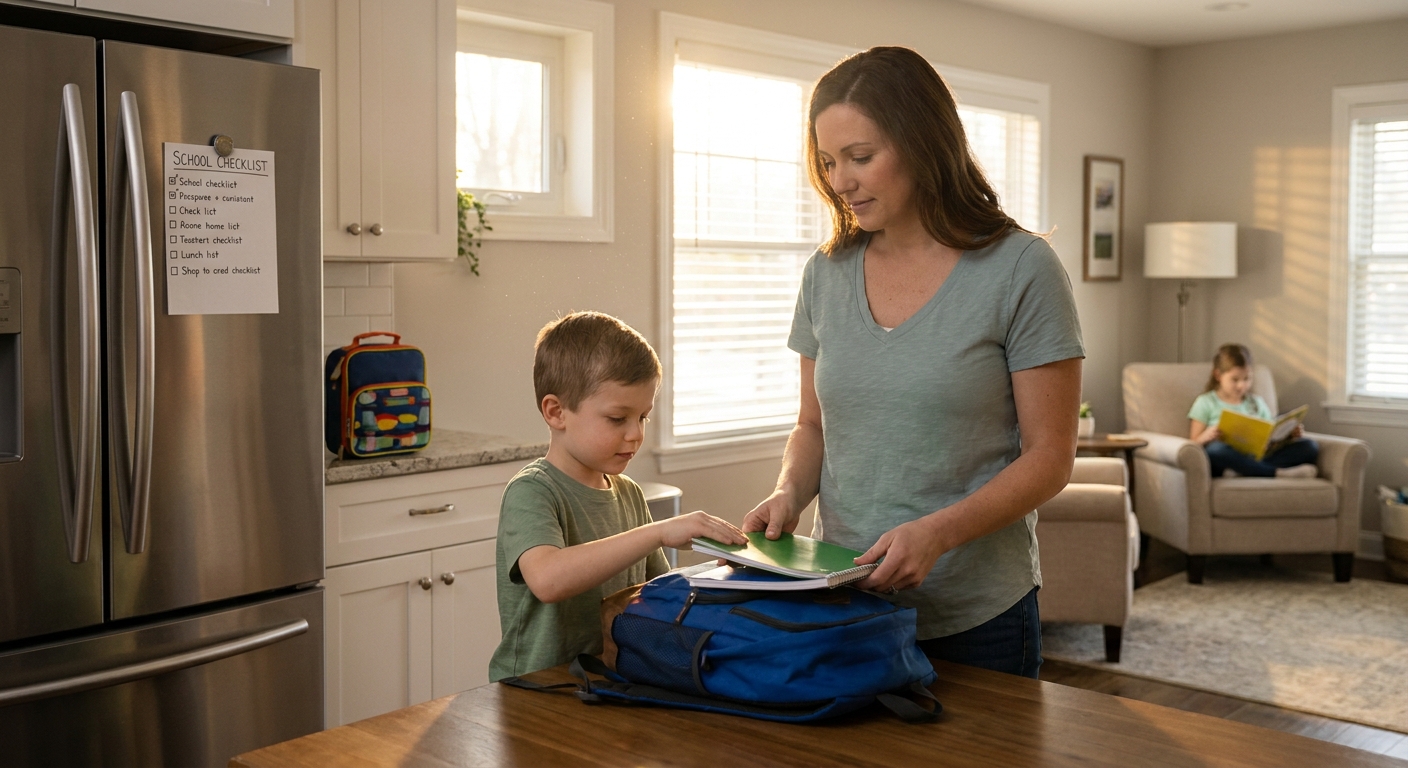
2. A Visual Morning Routine Chart
School-age kids love to feel capable. A visual checklist gives them ownership.
Steps to create one:
- List your 4–7 key tasks (e.g., pee, get dressed, eat breakfast, brush teeth, shoes, backpack).
- Draw simple pictures or print icons.
- Let your child decorate it and post it at their eye level.
Rather than repeated nagging, you can simply say, “Check your chart—what’s next?” It feels less like a power struggle and more like teamwork.
3. A No-Rush Zone (Leaving 10 Minutes Earlier Than You Think You Need)
This one is more about you than them. Kids sense our stress instantly. Leaving a 10-minute buffer for the unexpected (lost shoe, mystery sock emergency, sudden need for the bathroom) protects everyone’s nervous system.
If you’re often running late, start small: aim to be ready just 5 minutes earlier this week. Those few calm minutes can change the entire tone of the morning.
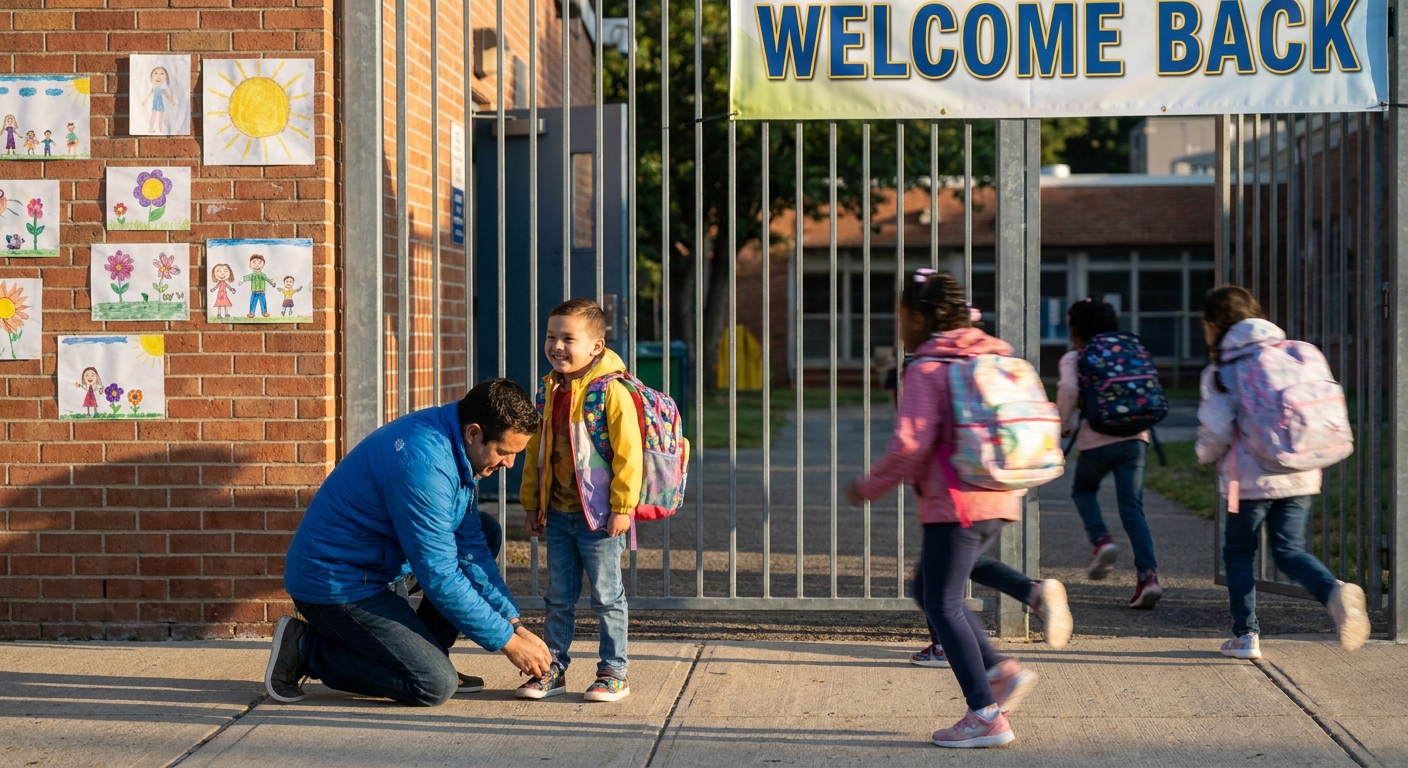
4. A Consistent Goodbye Ritual
Goodbye rituals help with separation anxiety and create a sense of security.
Try:
- A hug + high five + “Have a brave day.”
- A secret handshake only you and your child know.
- A phrase like: “I’m in your heart, and you’re in mine, even when we’re apart.”
Over time, this little ritual becomes your child’s emotional armor for the day.
5. The “Landing” Routine After School
After a long day holding it together, your child needs a gentle landing.
Create a simple, repeatable order like:
- Hug or silly greeting.
- Snack + water.
- 10–20 minutes of free play or quiet time.
- THEN questions about their day or homework.
You might say: “Let’s fuel your body first, then we can talk about your day if you want.”
This honors their need to decompress before downloading.
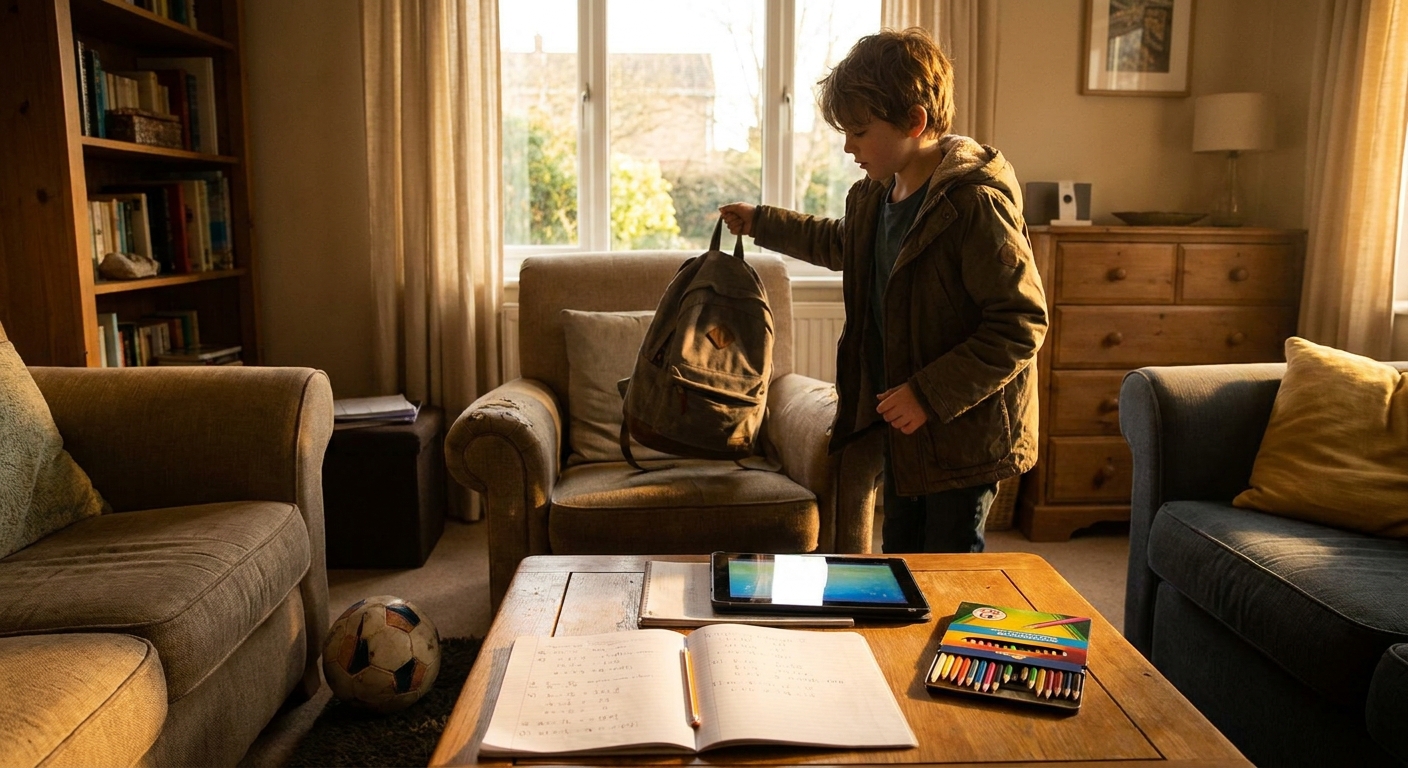
6. A Low-Stress Homework Block
Homework is often where battles begin. A routine makes it less personal and more predictable.
A simple structure:
- When: Same basic time each school day (e.g., after snack, before screen time).
- Where: A consistent spot with basic supplies.
- How long: Use a timer matched to their age and capacity (10–30 minutes for most elementary kids). If the timer goes off and they’re done for the day, that’s okay.
Let the teacher be in charge of evaluating the work. Your role is to provide the time, space, and calm support.
7. The “Rose, Thorn, Bud” Dinner Check-In
Instead of the vague, “How was school?” try a structured, gentle routine for sharing.
Each person shares:
- Rose: Something good from the day.
- Thorn: Something hard.
- Bud: Something they’re looking forward to.
This normalizes talking about both the sweet and the hard parts of life, and it gives insight into how your child is really doing.
8. A Calm-Down Corner, Not a Time-Out Corner
School days can overload nervous systems. Having a safe, cozy space at home to unwind can prevent small frustrations from becoming huge explosions.
Create:
- A soft spot with pillows or a beanbag.
- A few calming tools: stuffed animals, coloring pages, a glitter jar, noise-canceling headphones.
- Agreement that this is not a punishment space—it’s a helping space.
You can say: “Do you want to take a few minutes in the cozy corner or stay here with me?” Offer presence, not exile.
9. Bedtime Wind-Down That Starts Earlier Than You Think
Most school-age kids still need 9–12 hours of sleep. Many behavior challenges are simply tired brains and bodies.
Try a bedtime routine that starts 30–45 minutes before lights out:
- Bath or wash-up.
- Pajamas, teeth, bathroom.
- Story or quiet reading.
- 1–2 minutes of snuggles and chatting.
Keeping the same order, even if the timing moves a little, signals to the brain: “We’re winding down now.”
If bedtime is chaos right now, adjust one small thing at a time. Maybe just move screens to earlier in the evening, or start reading together again.
10. A Daily Moment of Unhurried Attention
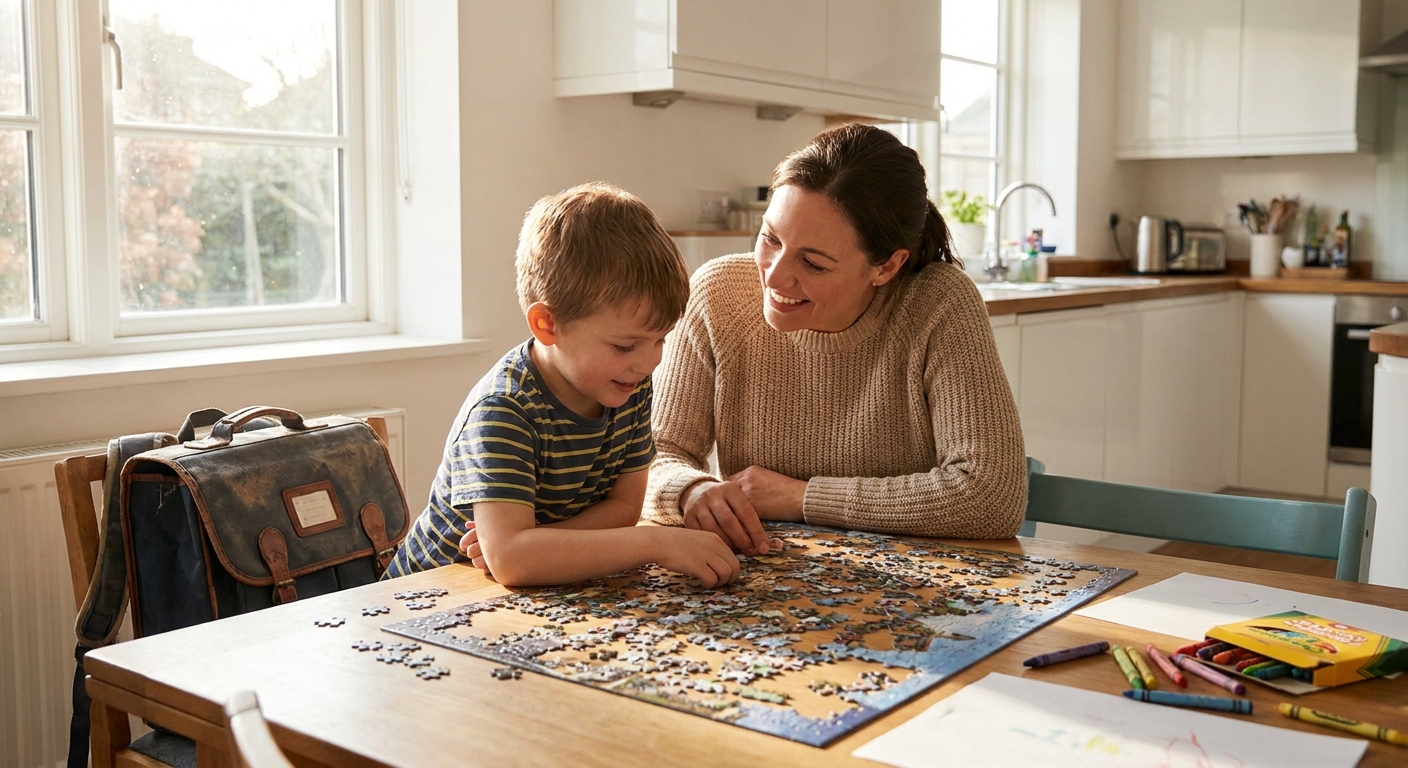
One of the most regulating “routines” you can build is just 10 minutes a day of focused, child-led time.
You might:
- Play their chosen game with your phone in another room.
- Draw or build together.
- Sit on the couch and let them talk about Minecraft or their friend drama.
During those 10 minutes, follow their lead and avoid correcting or teaching. Just be with them. This fills their connection tank, which often reduces attention-seeking behavior later.
Start Small and Be Kind to Yourself
You don’t need a perfectly choreographed household to raise a thriving school-age child. If mornings are rough right now, pick one small change from this list. If evenings are your hard spot, choose one there.
Routines are not about control; they’re about safety, predictability, and making life a little gentler for everyone—especially you. And the good news? Kids don’t need perfect consistency; they just need mostly steady and deeply loved. You already bring the love. The rest can grow slowly, in real life, with real kids and real mornings.