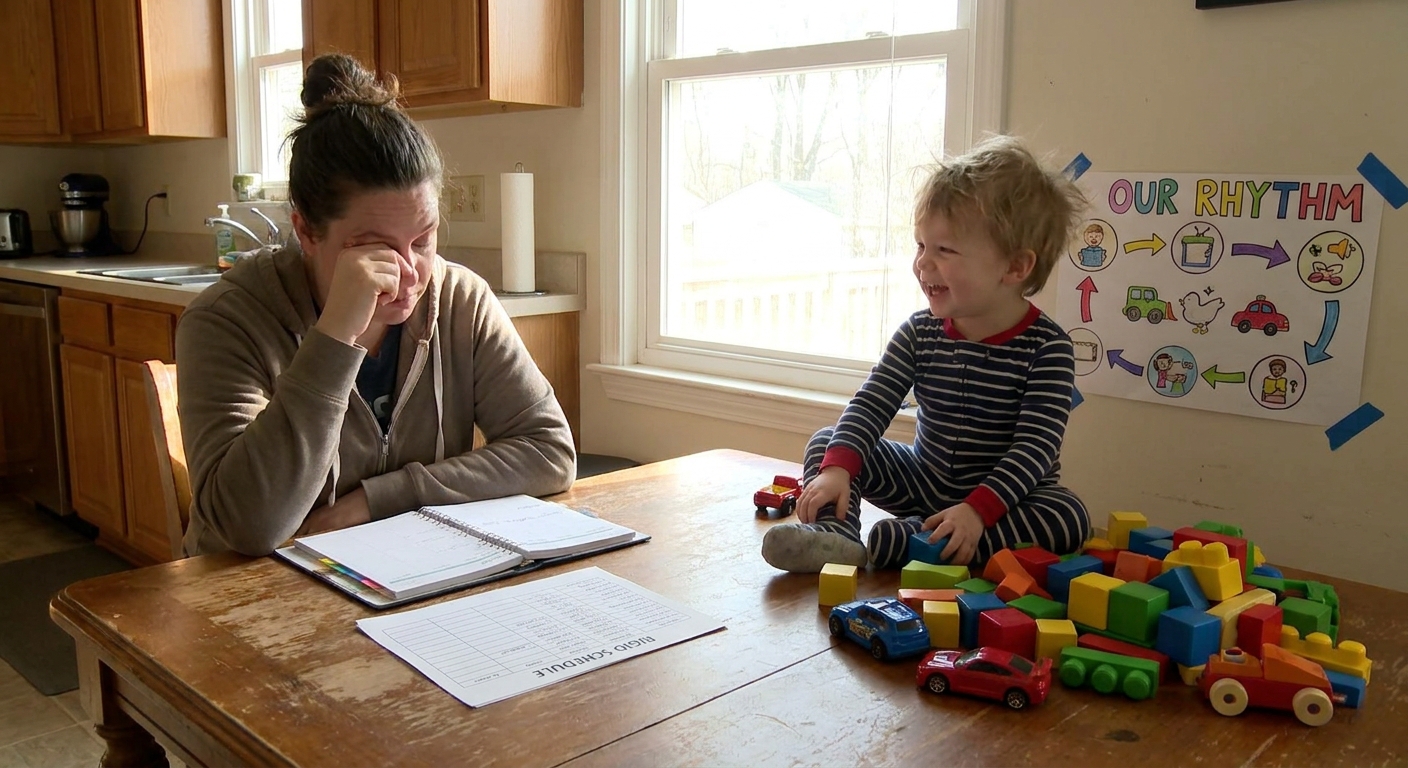
Toddlers feel safest when they have some idea of what’s coming next. But that doesn’t mean you need a military-style schedule to keep things on track.
Why Structured Days Matter in Toddler Life
Many parents wonder: “Should I put my toddler on a strict schedule, or just go with the flow?” The answer usually lies somewhere in the middle.
Let’s compare rigid schedules and flexible rhythms, and help you find what works best for your 1–3-year-old—and for you.
What Is a Toddler Schedule?
A schedule is more clock-based:
- 7:00 – Wake up
- 7:30 – Breakfast
- 9:00 – Park
- 12:00 – Lunch
- 1:00 – Nap
- 3:00 – Snack
- 6:00 – Dinner
- 7:30 – Bedtime
Pros of a Schedule
- Helpful for daycare or working-parent routines
- Easier to coordinate meals, naps, and outings
- Some toddlers really thrive on clear, consistent timing
Cons of a Schedule
- Can feel stressful when things don’t go “on time”
- Harder during sickness, travel, or developmental leaps
- May not suit every toddler’s natural energy and sleep patterns
What Is a Toddler Rhythm?
A rhythm focuses more on order of activities than exact times:
- Wake → breakfast → play → snack → outing → lunch → nap → quiet play → dinner → bath → stories → bed
There’s still a predictable flow, but the clock is looser.
Pros of a Rhythm
- More flexible for real life
- Easier to adjust for late wake-ups, appointments, or rough nights
- Often less pressure for both parent and child
Cons of a Rhythm
- Can drift if bedtime gets later and later
- Some children may end up overtired if naps get pushed too much
Schedules vs. Rhythms: A Side-by-Side Look
| Feature | Schedule | Rhythm |
|---|---|---|
| Focus | Clock times | Order of events |
| Flexibility | Lower | Higher |
| Best for | Daycare, predictable routines | Stay-at-home, changing days |
| Parent experience | Clear structure, possible stress | Gentle structure, less pressure |
| Toddler experience | Predictable, possibly rigid | Predictable, more adaptable |
You can absolutely blend both: a rhythm anchored by a few consistent times (like nap and bedtime).
What Experts Suggest for Ages 1–3
Pediatric sleep and child development specialists generally agree on a few things:
- Toddlers do best with repeated patterns each day
- Sleep and meal times that are roughly consistent help regulate mood
- Overly late bedtimes and chaotic nap times can lead to more meltdowns
But there’s a wide “normal” range.
Approximate guide (not rules):
- Total sleep in 24 hours (including naps):
- 1–2 years: 11–14 hours
- 3 years: 10–13 hours
- Naps: typically 1–2 for 1–2-year-olds, often 1 by age 2–3
Building a Gentle Daily Rhythm That Works for You
Let’s create a rhythm you can modify, not a schedule that controls you.
Step 1: Pick 3–4 Daily Anchors
Anchors are events you keep roughly consistent:
Common anchors:
- Wake-up window (ex: between 6:30–7:30)
- Lunch time (ex: around 12:00)
- Nap/quiet time (ex: around 1:00)
- Bedtime routine start (ex: 6:30–7:00)
Step 2: Fill the Gaps with Simple Blocks
Between anchors, think in blocks:
- Morning block: active play, outings, playground
- Midday block: lunch + rest
- Afternoon block: calmer play, books, indoor activities
- Evening block: dinner + wind-down
This gives you structure without feeling stuck.
Step 3: Add Predictable Routines to Key Moments
Toddlers love knowing “what comes next” inside routines.
Examples:
Nap routine (10–15 minutes):
Diaper change
Close curtains
Short book
Song, then bed
Bedtime routine (20–30 minutes):
Bath or wipe-down
Pajamas + brush teeth
1–3 books
Song or cuddle
Lights out
Doing these in the same order most nights signals to your toddler’s body: “Sleep is coming.”
A Sample Flexible Rhythm for a 2-Year-Old
- Wake (6:30–7:30) – Snuggles, diaper change, breakfast
- Morning (8:30–11:30) – Indoor play, snack, short outing or backyard
- Midday (11:30–1:00) – Lunch, quiet play, nap routine
- Nap (1:00–3:00) – Or whatever duration fits your child
- Afternoon (3:00–5:30) – Snack, outdoor time, simple activities
- Evening (5:30–7:30) – Dinner, bath, stories, bedtime routine
Times can shift by 30–60 minutes without derailing everything.
Real-World Examples: Different Families, Different Flows
Family A: Two Working Parents, Daycare
They lean more into a schedule:
- Daycare sets meal and nap times
- Parents keep a consistent bedtime on weekdays
- Weekends are a bit looser, but they stick to the same wake and bed windows
Family B: Stay-at-Home Parent and Shift-Working Partner
They lean more into a rhythm:
- Wake-up varies depending on nights
- They anchor lunch, nap, and bedtime routine
- Mornings and afternoons flex based on appointments and energy levels
Both families can have happy, secure toddlers.
Signs Your Current Setup Might Need Tweaking
Consider adjusting your schedule or rhythm if:
- Your toddler is regularly overtired (wired and wild before bed, frequent wake-ups)
- There are daily meltdown hotspots (same time every day)
- Meals are often very late or rushed
- Move bedtime earlier by 15–20 minutes
- Offer a snack before the usual meltdown window
- Protect nap time from too many errands
Small shifts often help:
Give Yourself Permission to Experiment
Some weeks you’ll feel organized; other weeks will be survival mode—and that’s okay.
Remember:
- You can adjust nap time during teething or growth spurts
- Travel, illness, and big changes will temporarily disrupt things
- It’s normal to course-correct many times in the toddler years
You’re not trying to create the perfect day. You’re aiming for a mostly predictable, mostly gentle rhythm your toddler can count on.
And the steadiness they feel from that—far more than perfectly timed activities—is what helps their little nervous system feel safe.