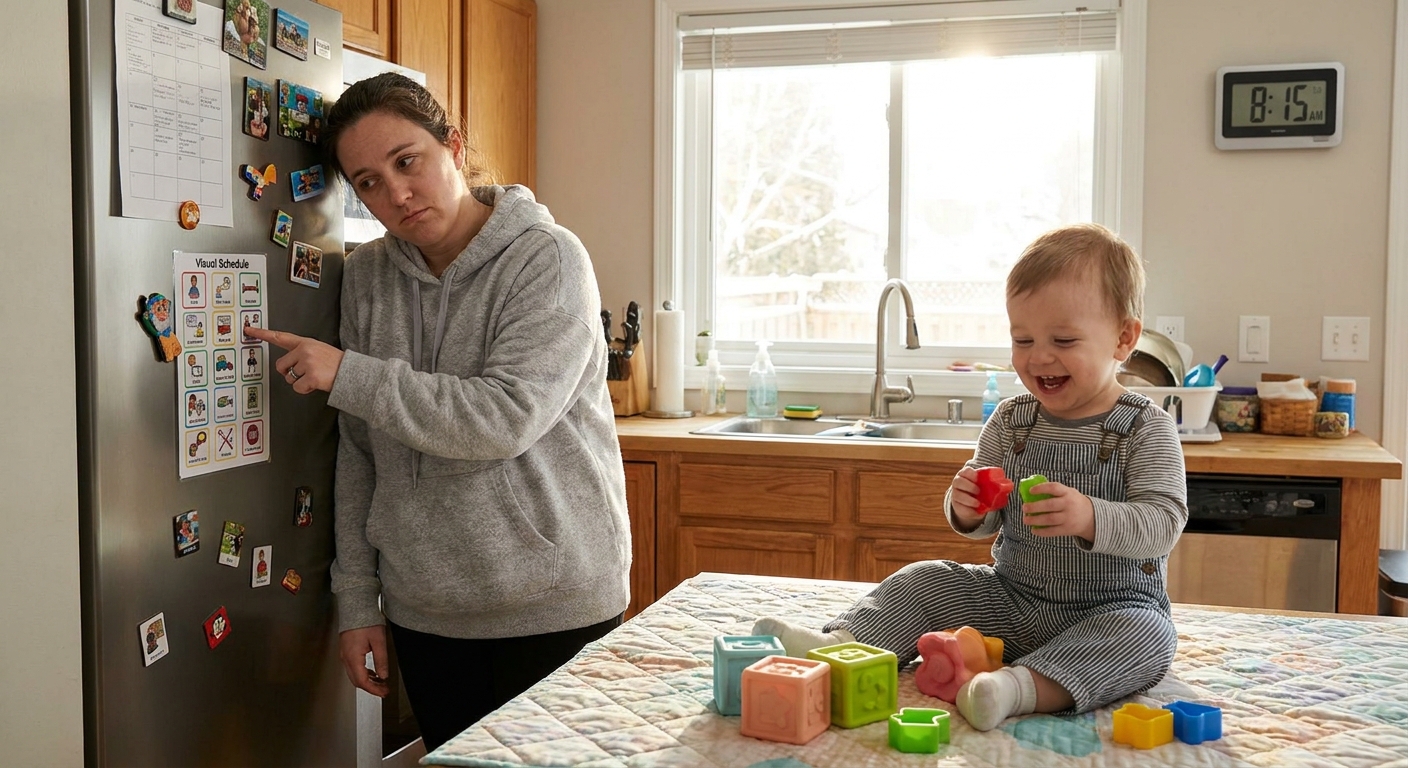
Setting limits with a toddler can feel like an endless tug-of-war. But boundaries aren’t about control; they’re about safety, predictability, and emotional security.
Why Boundaries Matter So Much in Toddler Life
Toddlers (roughly 1–3) actually feel safer when they know:
- What’s okay and what isn’t
- That you’re in charge of safety
- That your love doesn’t disappear when they’re upset
This guide will show you how to hold firm, kind boundaries–without turning every day into a battlefield.
The Toddler View: Why They Push Back
From your toddler’s perspective:
- They’re discovering their own will: “I do it!”
- They’re drawn to the most exciting things (phones, plugs, climbing spots)
- They want to repeat experiments: “What happens if I throw this again?”
Boundary-pushing is developmentally normal. It’s not a sign that you’re failing—it’s a sign your child feels safe enough to explore where the edges are.
The Three Kinds of Toddler Boundaries
Think of boundaries in three circles:
1. Non-Negotiables: Safety and Health
Examples:
- Car seat buckles
- Holding hands near roads
- Not hitting or biting
- Medicine and dangerous objects
These are the firmest boundaries. Your toddler doesn’t have to agree with them.
2. Important Family Values
Examples:
- “We speak kindly to each other.”
- “We clean up together before bedtime.”
- “We sit to eat.”
You’ll enforce these consistently, but with room for gentle, age-appropriate flexibility.
3. Flexible Decisions (Where You Can Say Yes)
Examples:
- Which pajamas to wear
- Which book to read first
- Whether to hop or walk to the car
These are your best spots to offer control and reduce power struggles.
A Simple Framework: Kind, Clear, Consistent
Be Kind
- Get down to their level
- Use a warm tone
- Acknowledge feelings: “You really wanted that.”
Be Clear
- Use short, simple sentences
- Say what to do, not just what not to do: “Feet stay on the floor.”
Be Consistent
- Follow through most of the time
- Keep limits the same between caregivers when possible
Consistency doesn’t mean never changing. It means your toddler can usually guess what you’ll say or do.
Real Phrases You Can Use
For Safety Limits
- “I won’t let you run into the street. I’m going to hold your hand.”
- “The oven is hot. I can’t let you touch it.”
For Unpopular Decisions
- “You really want more TV. TV is finished for today.”
- “You don’t want to get in the car seat. We have to buckle to be safe.”
For Rough Behavior
- “I won’t let you hit. Hitting hurts.”
- “You’re mad. You can stomp your feet, but I won’t let you bite.”
Short. Calm. Repeated as needed.
What to Do When They Explode at Your Limits
Meltdowns after boundaries are normal.
Step 1: Hold the Limit
Don’t change the rule just to stop the crying:
- “You’re so upset. I hear you. TV is still finished.”
Step 2: Stay Present (When You Can)
Offer:
- A nearby seat
- Open arms for a hug if they seek it
Let them know:
“You can be mad. I’m right here.”
Step 3: Keep Talking Simple
In the height of a meltdown, less is more. Save explanations for later, when they’re calm.
Preventing Some Power Struggles Before They Start
You can’t avoid all of them (and you shouldn’t try), but you can lower the daily total.
1. Limit the Number of “No” Moments
If everything is off-limits, toddlers naturally resist more.
- Put breakables out of reach
- Use cabinet locks for cleaning supplies
- Create a safe drawer or cabinet they can explore
2. Use Choices Inside Limits
- “It’s bath time. Do you want to walk to the tub or fly like an airplane?”
- “We’re leaving the park. Do you want to say bye to the swing or the slide first?”
The boundary stays (bath, leaving), but the method is flexible.
3. Connect Before You Direct
30–60 seconds of warm attention often soften resistance:
- Make eye contact
- Comment on what they’re doing: “You’re stacking those blocks so high!”
- Then: “It’s time for dinner now. Can you help carry a spoon?”
Handling Public Power Struggles (Without Shame Taking Over)
Public meltdowns are some of the hardest moments emotionally.
Try:
- Focus on your child, not on bystanders. Most people either understand or are too busy.
- Keep your response simple and consistent.
- “You’re upset. We’re still leaving the store.”
- Move to a quieter space if possible.
Afterward, be kind to yourself. You navigated a storm with a tiny human learning how to be a person in a big world.
The Myth of the Perfectly Calm Parent
You will:
- Say things you wish you hadn’t
- Give in sometimes just to survive
- Argue about parenting choices with your co-parent
Repair is more important than perfection.
You can say:
“I was really frustrated and I yelled. That wasn’t okay. I’m working on using a calmer voice.”
You’re modeling:
- Accountability
- Emotional honesty
- That love stays even when things are hard
Checking Your Own Boundaries
Your limits matter, too.
Ask yourself:
- “What do I need to stay mostly patient?”
- “What are my non-negotiables for me? (e.g., no phones at dinner, 10 minutes alone after work)”
When your own basic needs are somewhat met—sleep, food, a sliver of alone time—it’s easier to show up with the firmness and warmth your toddler needs.
A Final Reassurance
If it feels like your toddler pushes every boundary, it doesn’t mean they’re “bad” or you’re doing this wrong.
It means they are learning:
- What the world is like
- What you’re like
- Where they end and others begin
Your steady, imperfect presence—holding loving limits over and over—is what turns today’s power struggles into tomorrow’s inner sense of safety.
You don’t have to win every battle. You just have to keep showing that the boundary is there and your love isn’t going anywhere.